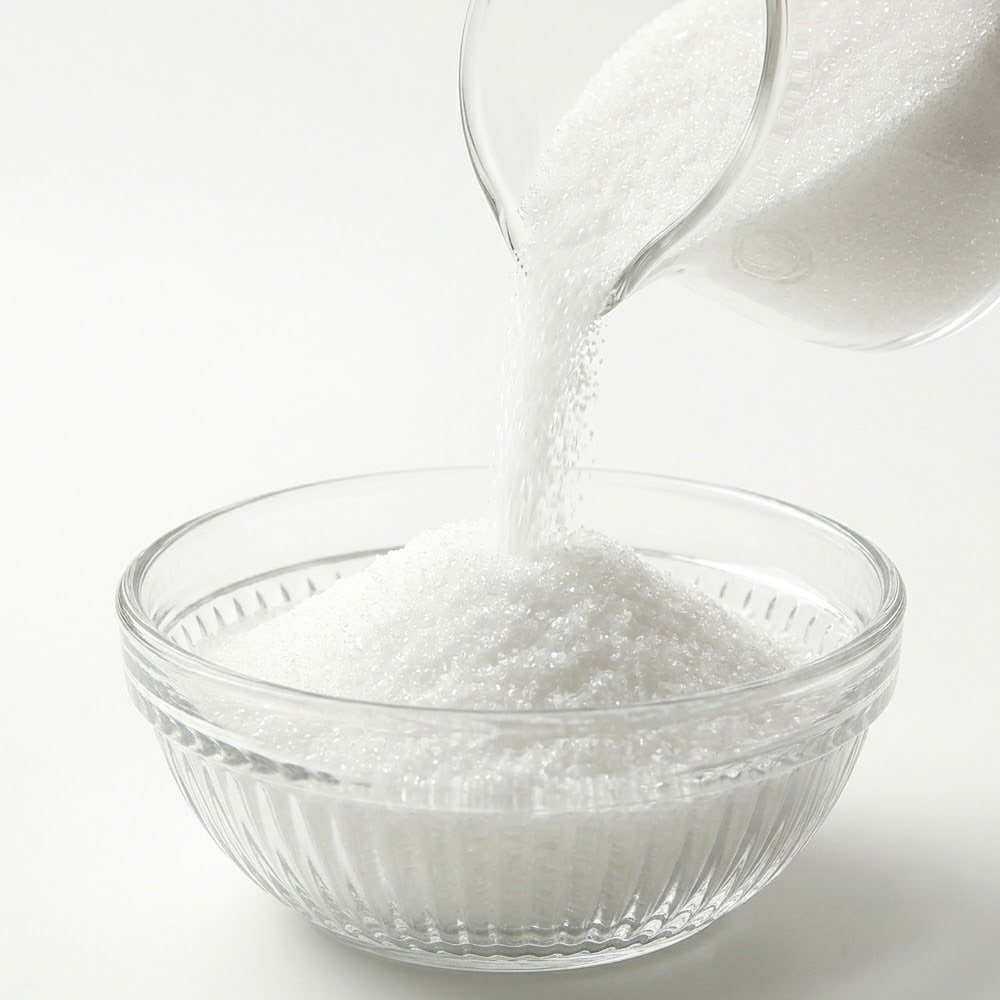
Xylitol is a naturally derived sugar alcohol (polyol) produced through the hydrogenation of xylose, most commonly sourced from corn cobs. As a low-calorie sweetening agent, Xylitol offers a sweetness profile comparable to sucrose, combined with bulk, texture contribution, moisture stability, and a distinctive cooling sensation — functional properties that make Xylitol a valuable ingredient across food manufacturing, pharmaceutical formulation, and oral care product development.
Demand for Xylitol continues to grow alongside global consumer interest in sugar-free and reduced-calorie products. Reformulation activity across confectionery, baked goods, dairy, and beverage segments has increased as brands respond to diabetes management awareness, weight control trends, and ongoing sugar reduction initiatives. Xylitol sits at the intersection of functional performance and health-conscious positioning, making Xylitol specification a recurring discussion point for procurement and R&D teams across multiple sectors.
Xylitol in crystalline powder form supports precise weighing and consistent dry-blending operations. Xylitol can be directly incorporated into suitable production lines without additional pre-processing steps. Key functional properties include:
Xylitol applications cluster around three established industry segments, each with distinct specification and documentation requirements.
Xylitol is widely used in chewing gum, hard candy, sugar-free chocolate coatings, and baked goods where sucrose reduction is a primary formulation objective. Xylitol contributes bulk and texture as a functional filler, not just sweetness. A common assumption is that Xylitol's near-equal sweetness allows a direct 1:1 sucrose swap — but differences in mouthfeel, water activity, and crystallization dynamics make Xylitol reformulation considerably more complex. Pilot-scale validation cycles before full production scale-up are standard practice for responsible Xylitol introduction.
The oral care industry represents one of the most established demand segments for Xylitol globally. Toothpaste, mouthwash, and oral care confectionery formulations incorporate Xylitol based on its long-standing regulatory acceptance across multiple markets. For buyers developing products with dental health benefit claims, Xylitol grade selection and available regulatory documentation are both relevant procurement factors — market-specific claim allowances for Xylitol vary and should be verified during supplier qualification.
In pharmaceutical formulations, Xylitol serves as an excipient in chewable tablets, syrups, lozenges, and direct-compression tablet manufacturing. Pharma-grade Xylitol carries stricter purity requirements and more detailed documentation obligations compared to food-grade Xylitol. Buyers operating across both food and pharmaceutical production lines benefit from sourcing Xylitol from a single qualified manufacturer that covers both grade specifications, reducing supplier qualification and ongoing audit workload.
Selecting the appropriate Xylitol grade requires a systematic evaluation. A practical checklist for Xylitol procurement includes:
One additional consistency consideration: sourcing Xylitol batches from multiple suppliers simultaneously — even within the same purity specification — can introduce batch-to-batch variation in sensory and physical properties. For production lines where batch uniformity is a priority, single-supplier Xylitol batch management is generally the more straightforward approach.
Xylitol's dual positioning as a functional ingredient and a health-claims-enabling component means supplier qualification extends beyond purity specification and unit price. Procurement teams evaluating Xylitol suppliers typically assess production capacity and supply continuity for annual contract planning, export documentation experience in relevant target import markets, and access to Xylitol application technical guidance for formulation support.
For buyers sourcing Xylitol specifically for oral care or dental health claim applications, documentation of Xylitol's non-cariogenic regulatory basis in the target market — and the supplier's ability to provide relevant supporting materials — is a distinct and often underestimated part of the qualification process.
Xylitol suppliers with established corn deep-processing capabilities and integrated quality management infrastructure are generally better positioned to provide consistent Xylitol purity across production runs, responsive batch documentation, and the logistics experience needed to support international procurement reliably. For buyers in Southeast Asia, North America, or other export-active markets, total landed cost planning — including Xylitol lead time, port proximity, and customs documentation readiness — is as important as ex-works unit pricing in long-term Xylitol supplier evaluation.
 EN
EN