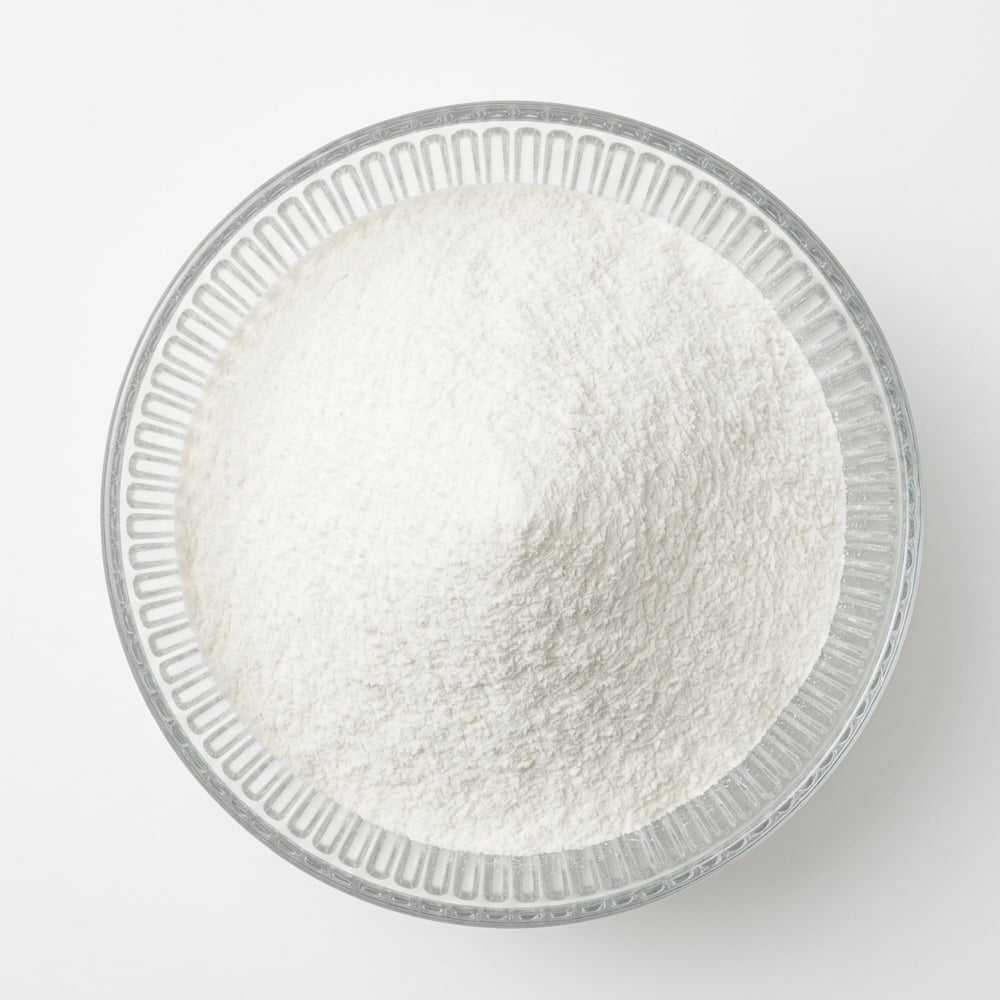
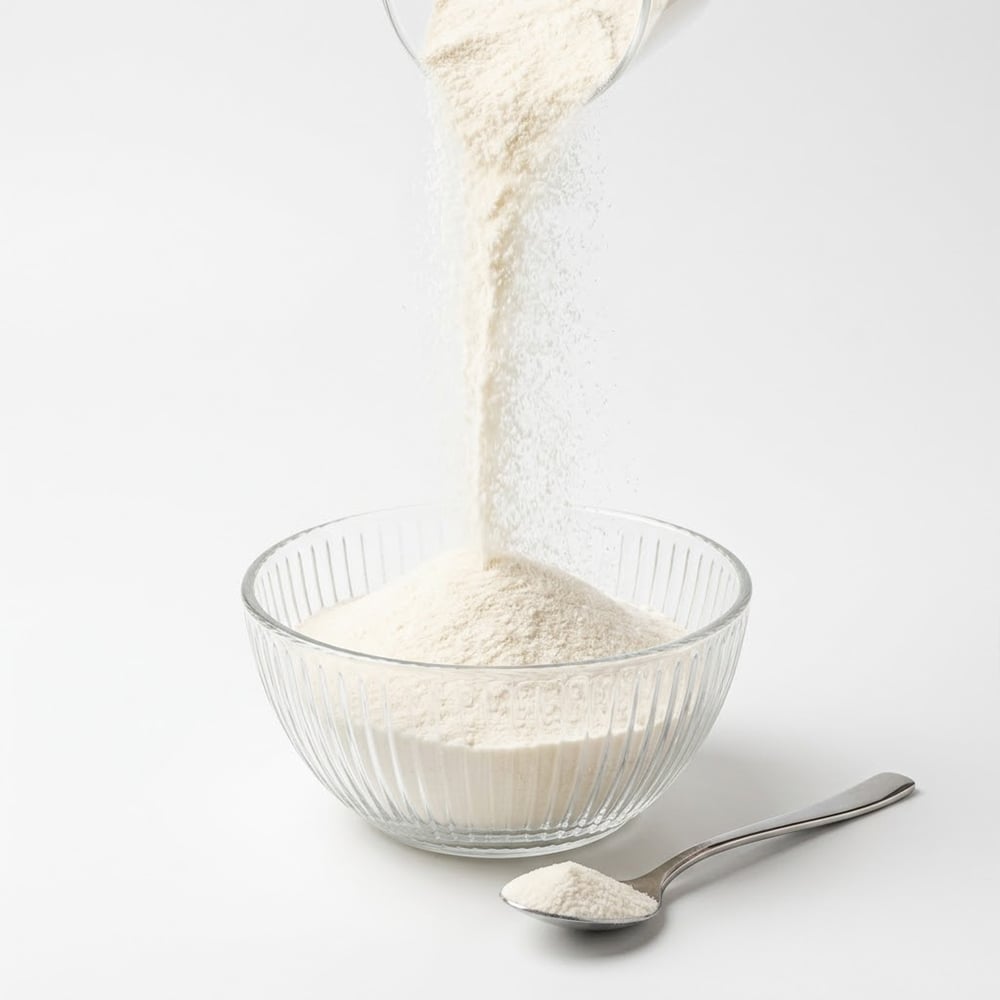
Glucose syrup powder — also referred to as spray dried glucose or dried glucose syrup — is produced by enzymatic hydrolysis of starch (typically corn), followed by a controlled spray-drying process that converts liquid glucose syrup into a stable, free-flowing powder. The result is a white, dry ingredient with instant cold-water dissolution, moderate sweetness, and a defined dextrose equivalent (DE) value that governs its functional behavior across downstream formulations.
Unlike liquid glucose syrup, glucose syrup powder eliminates the need for liquid handling equipment, enabling direct incorporation into dry-mixing lines, premix operations, and powder blending systems. This physical form advantage makes it the preferred choice when low water activity, precise dry dosing, or shelf-stable powder formulation is a process requirement. In finished formulations, glucose syrup powder may contribute sweetness, bulk, texture, moisture management, and processing stability — depending on the specific application and process conditions.
This category includes glucose syrup powder in two specification grades, each calibrated for different formulation and processing profiles:
Before committing to a grade, here is a practical question worth asking: what matters more to your process — handling consistency on the production line, or precise sweetness level in the finished product? The answer often determines whether the general purpose or high purity glucose syrup powder grade is the right starting point for your internal specification.
Glucose syrup powder delivers functional value across a wide range of food, beverage, and feed categories. The following scenarios represent the most established application areas where the powder form and functional profile align well with formulation requirements:
From a procurement and formulation perspective, selecting the appropriate glucose syrup powder grade should extend beyond comparing sweetness level alone. The practical evaluation dimensions include: DE value and its specification tolerance, dissolution rate under your process conditions, particle size distribution consistency across supply batches, moisture content at point of delivery, and the certifications required for your target market and customer supply chain.
One frequently overlooked consideration: glucose syrup powder exhibits good cold-water solubility, but this does not mean it is inherently low-hygroscopic. In high-humidity storage environments, or during open-bag handling on production lines in tropical climates, caking and reduced flowability can become a measurable quality risk. This distinction between solubility and hygroscopicity is worth factoring into your storage specifications and supplier packaging requirements.
Batch-to-batch consistency is another dimension that procurement teams in food manufacturing consistently identify as a critical evaluation criterion. Variation in DE value, particle size, or moisture content across supplier batches — or when mixing batches from different sourcing periods — can introduce unexpected shifts in finished product texture, sweetness profile, and dissolution behavior. These issues are far easier to prevent through clear specification alignment and COA review protocols than to diagnose and correct after production.
For applications entering markets with religious dietary certification requirements — including Southeast Asian markets requiring Halal compliance, or supply chains with Kosher certification requirements — confirming certificate scope, issuing authority, and renewal schedule is a standard supplier qualification step, not an optional one.
The functional consistency of glucose syrup powder is directly linked to upstream production controls: starch hydrolysis conditions, spray-drying parameters, and post-process quality management all determine whether the ingredient performs predictably in your formulation over multiple supply cycles. Sourcing from a manufacturer operating under a certified food safety management system — with documented support for buyer quality audits, batch traceability, and structured COA verification — reduces qualification burden and supports formulation stability in long-term supply relationships.
For buyers in regulated or certification-sensitive markets, access to verified Halal and Kosher certificates for specific product grades, alongside food safety management certifications such as FSSC 22000, ISO 9001, and ISO 14001, is a procurement prerequisite. Confirming the certificate scope and applicability at the shortlisting stage prevents compliance gaps later in the supply relationship.
The decision between powder and liquid glucose syrup is ultimately a process compatibility question. If your production infrastructure is designed for dry ingredient handling and your formulation requires low water activity, glucose syrup powder typically offers lower total handling cost and simpler production line integration than liquid glucose syrup alternatives. The trade-off is tighter storage condition management to protect flowability, moisture content, and prevent hygroscopic caking over the storage period.

 EN
EN