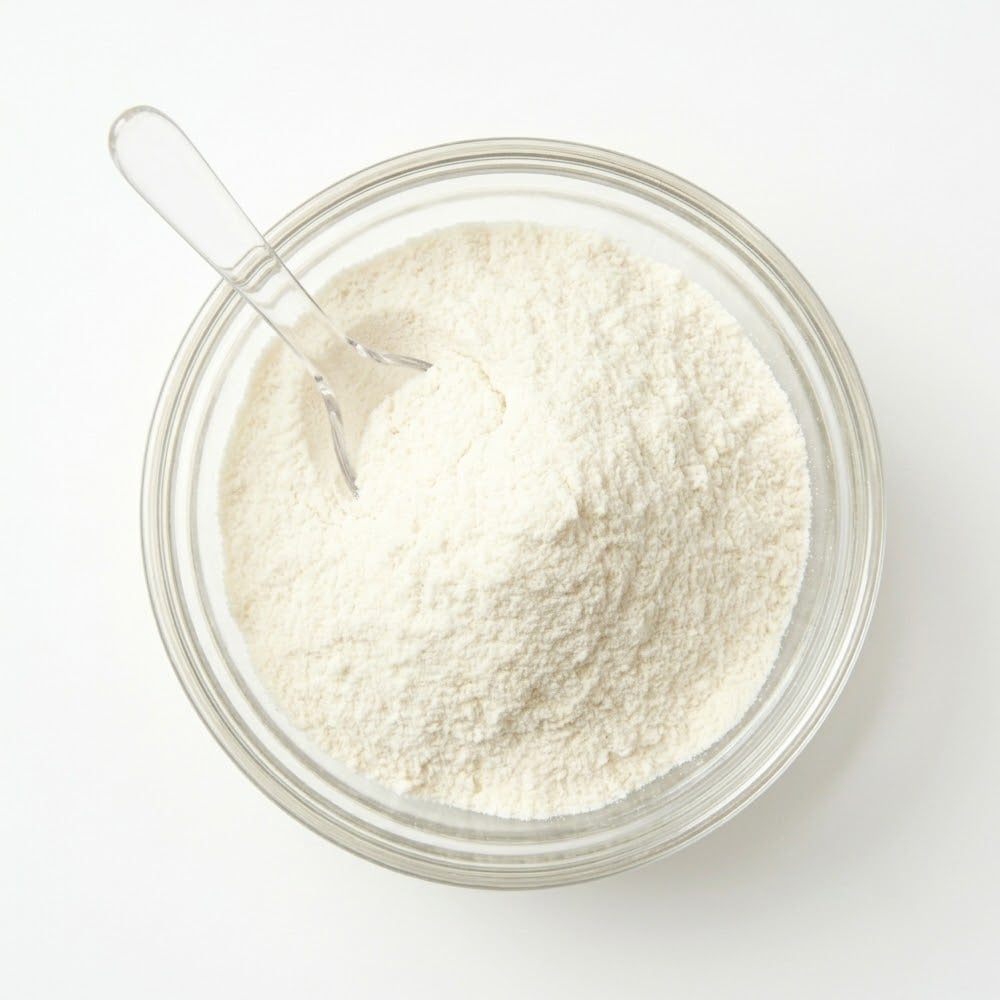
Non-dairy creamer — also known as plant-based creamer powder or coffee whitener — is a spray-dried powder ingredient formulated to replicate the whitening effect, creamy mouthfeel, and emulsification function of dairy cream, without requiring refrigeration or reliance on milk fat. Produced from a combination of vegetable oils, glucose syrup, emulsifiers, and stabilizers, non-dairy creamer has become a standard ingredient in instant beverage systems, dairy-analog products, and a growing range of bakery and confectionery applications globally.
For food and beverage manufacturers sourcing bulk ingredients, the case for non-dairy creamer is rarely about replacing dairy for its own sake. It is about achieving consistent sensory results — whiteness, body, and mouthfeel — across high-volume production runs where dairy cream introduces variability, cold-chain cost, and shorter shelf life. Before committing to a supply specification, here is the question worth asking first: are your production targets and shelf-life requirements compatible with what liquid dairy can realistically deliver at scale? For most instant beverage and export-oriented food manufacturers, non-dairy creamer powder addresses that gap directly.
One point that is frequently underestimated: non-dairy creamer generally has good dispersibility in hot water, but this does not mean it is low-hygroscopic. In tropical or high-humidity warehouse environments, caking, clumping, and reduced flowability are real quality management risks if packaging integrity and storage conditions are not carefully maintained. Confirming handling and storage protocols with your supplier before finalizing procurement specifications can prevent quality issues downstream.
The most established application for non-dairy creamer is in instant coffee systems — 3-in-1 mixes, 2-in-1 formats, and ready-to-mix sachets. Non-dairy creamer provides the whitening and mouthfeel component that delivers a creamy cup without requiring fresh dairy. For this application, solubility and whitening efficiency are the two most critical specification priorities. Fat content grade selection should be aligned with both the target whitening level and any caloric claims on the finished product label.
Milk tea and bubble tea manufacturers — particularly across Southeast Asia — are among the largest users of non-dairy creamer in blended powder formats. Creamy mouthfeel and batch-to-batch consistency are the primary selection criteria in this segment. Emulsion stability under the reconstitution conditions specific to tea bases — including water temperature, agitation method, and beverage pH — should be evaluated before finalizing specification requirements.
Non-dairy creamer is used in cakes, biscuits, and confectionery fillings as a fat contributor and emulsification aid. In bakery applications, the ingredient functions primarily as a texture modifier rather than a whitening agent. Higher fat grades contribute more to richness and mouth-coating effect; lower fat grades are better suited when calorie reduction is a formulation objective. This is an application where getting the fat content specification right from the start avoids costly reformulation later.
In instant soup bases and powdered sauce mixes, non-dairy creamer contributes body, creaminess, and emulsification stability. Savory powder applications place particular demands on heat stability and dispersibility in salt-heavy matrices. Full-formulation compatibility testing is strongly recommended before committing to specification requirements for savory applications, as interaction effects with salt and other seasoning components can affect emulsion behavior.
Non-dairy creamer is increasingly specified in plant-based drink formulations, meal replacement powders, and nutritional food products where dairy-free claims are required. In these applications, both the ingredient performance profile and the supplier's certification documentation — particularly Halal and Kosher compliance — are integral to product qualification and market access.
The first step before comparing supplier prices is to define your specification requirements clearly — because the right non-dairy creamer is not a single product, but a profile built around your specific application, target market, and production environment. As experienced food ingredient procurement professionals frame it: confirm specifications first, compare pricing second.
Key selection criteria for industrial buyers:
Non-dairy creamer occupies a structurally important position in the instant beverage supply chain. For manufacturers supplying the coffee and tea beverage segment — particularly in export markets across Southeast Asia and beyond — this is a recurring, high-volume ingredient with limited mid-formulation substitution options once it is designed into a product. Switching suppliers after launch requires sensory re-validation, COA comparison, and in some markets, regulatory re-submission. This makes the initial supplier selection decision more consequential than it may appear at the time of first procurement.
For buyers sourcing multiple powder ingredients — including starch-based sweeteners, glucose syrup, and maltodextrin — there is a logistical and qualification advantage in consolidating supply from a manufacturer that produces all of these categories under one facility and management system. Co-supply arrangements reduce shipping complexity, simplify annual audit scheduling, and create a single documentation contact for export compliance requirements.
Certification capability is a practical buying criterion with real market access implications. Confirming that your non-dairy creamer supplier holds relevant Halal and Kosher certifications — and that those certifications cover the specific grade you require — should be part of initial supplier shortlisting, not a late-stage verification step. Delays in certification confirmation are a common cause of product launch timeline slippage in markets where certification-restricted procurement applies.
Our non-dairy creamer series is produced for dairy replacement and plant-based food applications, with a focus on whitening performance, creamy mouthfeel, and consistent stability across production environments. For detailed product specifications, fat content grade options, certification documentation, and co-supply availability alongside related starch-based ingredients, contact us to request product information or samples.

 EN
EN