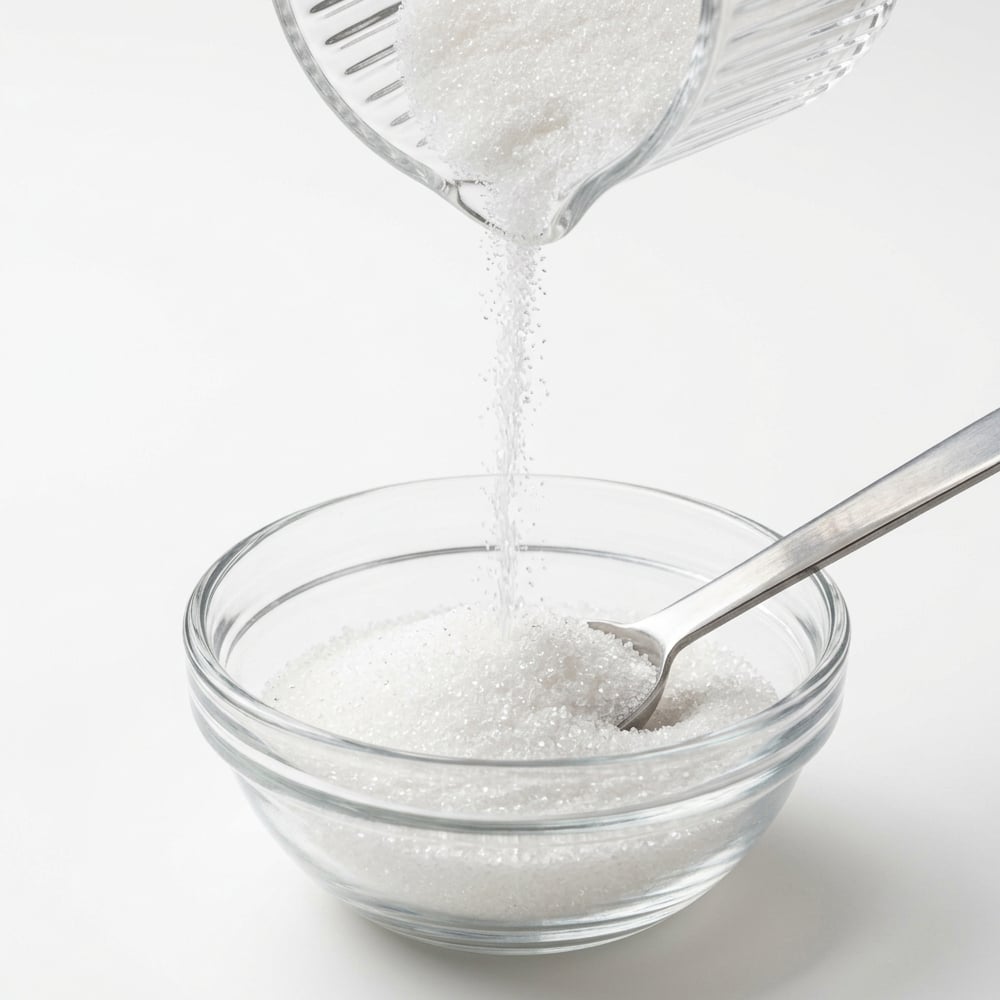
Maltitol powder is a sugar alcohol (polyol) derived from the hydrogenation of maltose, offering approximately 90% of sucrose's sweetness at roughly half the caloric value. As health-conscious consumers increasingly seek reduced-sugar and sugar-free alternatives, food manufacturers across confectionery, baked goods, dairy, frozen desserts, and pharmaceutical formulation are specifying maltitol powder as a functional sucrose substitute. Before finalizing your formulation, the question worth asking is: what matters more to your end product — matching sweetness level, replicating the bulk and texture of sugar, or meeting a specific regulatory labeling threshold?
The sugar-free and reduced-sugar trend has moved well beyond niche health food aisles. Consumer interest in diabetes management, weight control, and dental health has accelerated reformulation activity globally, making maltitol powder one of the most consistently specified polyols in both food and pharmaceutical ingredient procurement. The confectionery segment alone — spanning sugar-free chocolate, hard candy, chewing gum, and soft candy — remains the largest single end-use market for sugar alcohols worldwide, and maltitol powder holds a dominant position within it precisely because of its sugar-like mouthfeel and high sweetness parity.
Maltitol powder is the preferred sweetener in sugar-free chocolate formulations because its bulk, mouthfeel, and sweetness level closely replicate sucrose — a property no other polyol achieves at the same performance ratio. However, a widely shared misconception deserves correction: maltitol powder's 90% sweetness does not translate into a direct 1:1 weight-for-weight substitution for sucrose. Changes in water activity, crystallization behavior, and mouthfeel perception require formulation adjustment beyond a straight swap. Most confectionery manufacturers run application trials to calibrate their specific formulation before scaling to production.
In cookies, cakes, and bread formulations, maltitol powder supports reduced-sugar labeling while maintaining moisture retention and texture targets. For soft baked goods, maltitol's moderate hygroscopicity contributes to shelf life by reducing crumb drying. Buyers targeting shelf-stable products in high-humidity markets should evaluate packaging specifications alongside ingredient selection to manage moisture balance over the product's intended shelf period.
Pharmaceutical-grade maltitol powder meeting USP/NF or EP specifications serves as both a sweetening agent and a filler-binder in chewable tablet formulations. Its non-cariogenic property is particularly relevant for oral health supplement formats. If your application requires pharmaceutical excipient documentation — including pharmacopoeial compliance certificates, DMF references, or third-party audit support — verify supplier documentation capability as part of the qualification process rather than assuming availability.
Maltitol powder's solubility profile and absence of cooling effect make it suitable for panning and enrobing applications in chewing gum and hard candy manufacturing. Consistent particle size is a key specification variable in these applications: particle distribution affects both dissolution rate and coating uniformity, and mixing batches from different suppliers — or even different production lots with drifting particle size — can introduce sensory inconsistency at the finished-product level.
Low-calorie ice cream and frozen dessert formulations use maltitol powder to hit sweetness and texture targets while supporting reduced-calorie claims. Maltitol's freezing point depression behavior differs from sucrose, which affects texture at serving temperature. This parameter should be validated during pilot production with your specific formulation rather than extrapolated directly from sucrose reference data.
Sugar alcohols including maltitol powder are increasingly specified in nutritional bars, meal replacements, and functional food formats where low glycemic index and sugar-free positioning are product differentiators. Formulation compatibility with protein matrices, fiber systems, and fat phases should be confirmed during development given the varied physical behavior of maltitol powder across different ingredient combinations.
Choosing between food-grade and pharmaceutical-grade maltitol powder depends on your finished product's regulatory environment and documentation requirements, not simply on the purity number. A food-grade product at ≥98% assay and a pharmaceutical-grade product at the same assay may deliver comparable sweetness and functional performance, but the testing methods, documentation standards, and audit expectations differ substantially.
Consider batch-to-batch consistency as a procurement risk variable. Introducing maltitol powder from multiple suppliers — even suppliers with equivalent specifications — can introduce particle size, moisture, and assay variation that may not be detected at incoming inspection but surfaces as sensory inconsistency over production cycles. Establishing single-source procurement or clearly managed dual-source specifications reduces this risk.
For manufacturers exporting to multiple markets: maltitol powder is broadly accepted as a food additive across North America, Europe, and major Asian markets, but specific usage limits, labeling rules, and market-entry documentation vary. Buyers exporting to the US, EU, Southeast Asian markets, or markets with halal or kosher requirements should request market-specific compliance documentation during supplier qualification rather than assuming universal regulatory alignment.
Purity grade versus procurement cost is a real trade-off in polyol sourcing. The decision comes down to the sensitivity of your specific application — whether to residual heavy metals, microbiological limits, or pharmacopoeial identity testing — rather than a simple preference for the higher-specification product.
Supply continuity is a practical concern in polyol procurement that receives less attention than unit price during initial sourcing decisions. For food manufacturers managing continuous production lines or seasonal demand peaks — confectionery, in particular, sees concentrated order windows around major holidays — maltitol powder supply reliability directly affects production planning and inventory strategy.
Huanfa Biotechnology produces starch sweeteners and sugar alcohol derivatives including maltitol powder at an integrated corn deep-processing facility in Guangdong, China, with total annual production capacity across its product lines exceeding 800,000 tonnes (capacity by product category available upon inquiry). Integrated raw material sourcing from corn through to finished polyol production reduces exposure to third-party supply disruption, supporting consistent availability for long-term supply contracts.
Supplier qualification support — including quality audit facilitation, certificate of analysis documentation, third-party inspection coordination, and compliance document preparation for export markets — is part of the standard engagement process for regulated food and pharmaceutical buyers. An established quality management system that accommodates both on-site and documentation-based audit formats reduces friction in annual supplier requalification cycles.
Whether you are sourcing maltitol powder for a new sugar-free product launch, reformulating an existing confectionery line to meet evolving labeling requirements, or building a backup supply option for supply chain resilience, the evaluation should start with application-specific specification matching — and confirm supply capability before committing to volume procurement.

 EN
EN