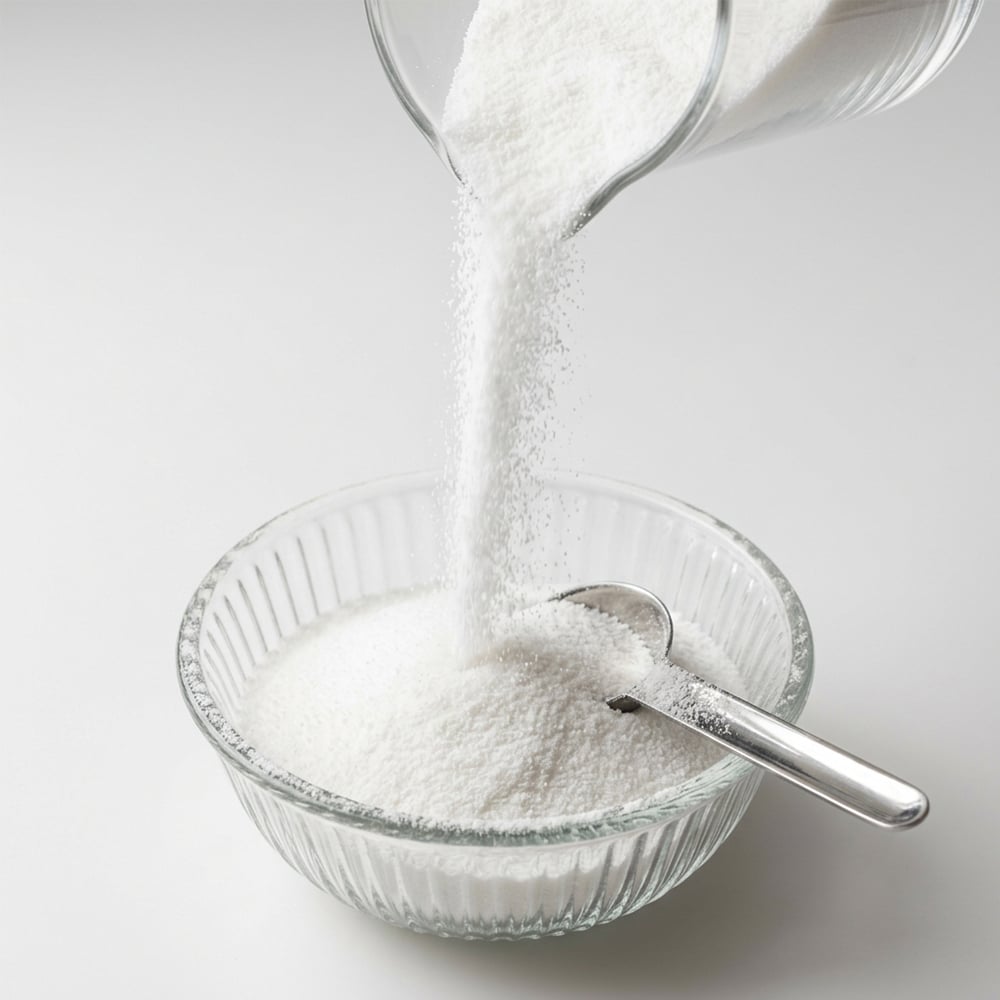
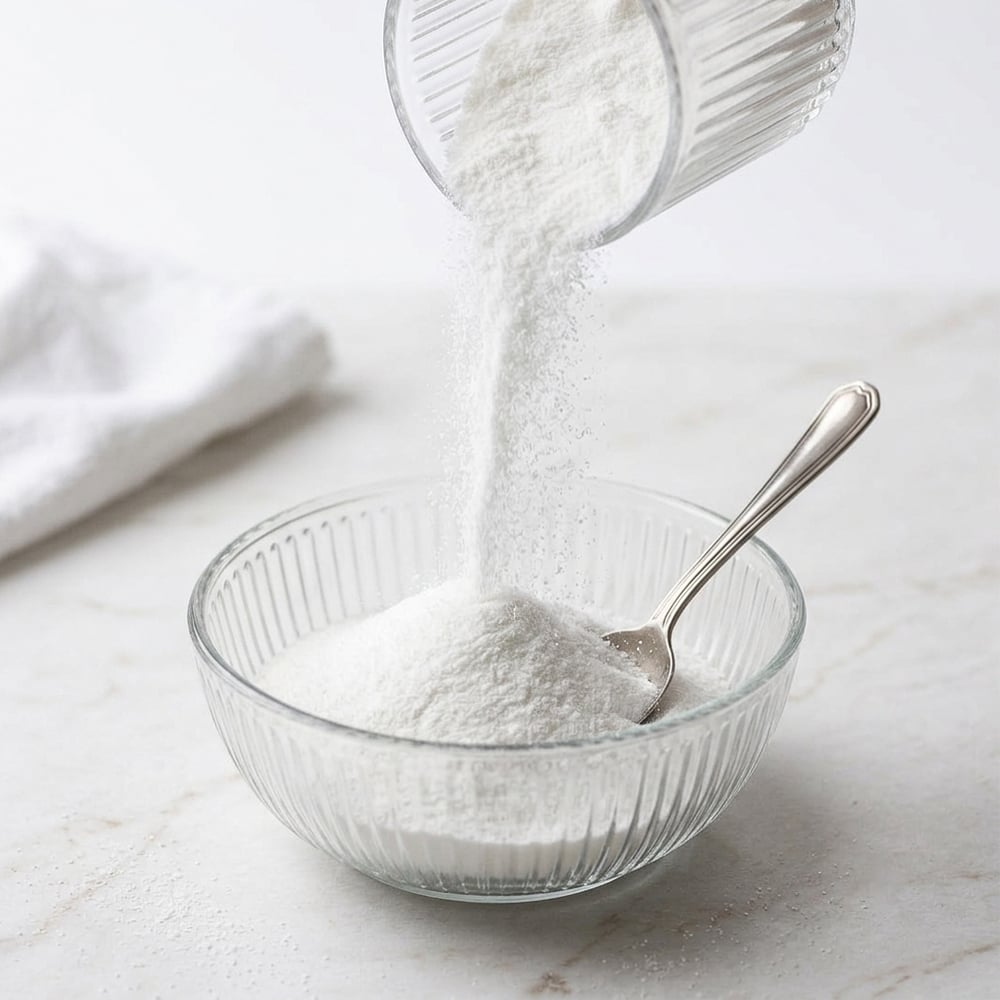
Isomalt (INS 953) is a sucrose-derived polyol produced through a two-stage process: enzymatic conversion of sucrose into isomaltulose, followed by catalytic hydrogenation. Isomalt consists of an equimolar mixture of GPS (α-D-glucopyranosyl-1,6-sorbitol) and GPM (α-D-glucopyranosyl-1,6-mannitol). With a caloric value of approximately 2 kcal/g and relative sweetness at around 45–65% of sucrose, Isomalt occupies a distinct functional position among polyols. Here is the question formulation teams often face early in a project: does knowing the sweetness ratio tell you how to substitute Isomalt in a real recipe? In practice, bulk density, crystallization behavior, hygroscopicity, and solubility interact in ways that make Isomalt substitution considerably more involved than a simple ratio swap.
The global push toward sugar-free and reduced-sugar products is accelerating reformulation activity across confectionery, baked goods, pharmaceutical dosage forms, and functional food segments. Isomalt is well positioned in this transition because Isomalt combines non-cariogenic, low glycemic index, and exceptionally low hygroscopicity properties — characteristics that matter differently depending on the specific application and target market.
The confectionery segment is the largest end-use market for sugar alcohols globally, and Isomalt is established across multiple confectionery formats. Understanding application-specific requirements helps select the right Isomalt grade from the outset.
Hard boiled candy and lollipops: Isomalt's combination of low hygroscopicity, no Maillard browning, and optical transparency makes Isomalt well suited to transparent hard candy formats. Isomalt-based products can be displayed unwrapped without stickiness under normal retail conditions. Isomalt ST30's standard granule form is compatible with conventional batch cooking lines for this application.
Chewing gum centers and coatings: Isomalt's low solubility contributes to improved flavor retention in gum centers. Isomalt's color brilliance properties support single-syrup coating processes. Grade selection between ST30 and ST80 depends on process line configuration and the particle size requirements of the coating operation.
Chocolate and coated products: Isomalt's moisture stability helps prevent surface bloom and quality defects in chocolate enrobing and panning applications. Isomalt's absence of a cooling effect is particularly valued in milk and white chocolate analog formulations where natural mouthfeel parity is a target.
Pharmaceutical tablets and medicated lozenges: Isomalt ST80, with a fine powder particle size of approximately 80 mesh and optimized surface area, is designed for direct compression tablet manufacturing. Isomalt ST80's bitter-masking property supports palatability in compressed lozenge and tablet formats. Pharmaceutical buyers should verify Isomalt compliance with applicable excipient monographs and conduct supplier qualification per their quality management requirements.
Tabletop sweeteners and compressed mints: Isomalt ST80's fine powder grade enables compact tablet formats with practical dissolution profiles, relevant for tabletop sweetener sachets and compressed mint products requiring rapid mouth dissolution.
From a formulation development perspective, the critical question is how the physical form of Isomalt interacts with your specific process conditions and product performance targets. Here is a practical starting framework:
If your procurement strategy involves sourcing Isomalt across both food and pharmaceutical product lines, working with a supplier whose quality system spans both grade tiers can simplify documentation and reduce the overhead of parallel supplier qualification tracks.
Isomalt procurement decisions involve evaluating compliance documentation, batch-to-batch consistency, and supply reliability alongside unit price. For buyers in regulated markets including the United States, Canada, and the European Union, Isomalt's USP/NF and EP pharmacopoeia alignment is a practical qualification checkpoint. Buyers should request current Isomalt certificates of analysis and verify alignment with the specific pharmacopoeia edition applicable to their product registration.
For buyers in Southeast Asian markets including Thailand, Vietnam, Malaysia, Indonesia, and the Philippines, Huanfa's export infrastructure and Guangdong-origin shipping logistics support competitive transit times for Isomalt supply. Isomalt demand in these markets is growing as product developers respond to consumer preference shifts toward sugar-free and reduced-calorie options.
Formulation teams developing new product lines with Isomalt should account for formulation iteration time. Pilot batch results in Isomalt confectionery cooking processes and direct compression manufacturing often require production-scale validation before ingredient specifications and supplier qualification are finalized. Building this cycle into Isomalt procurement planning reduces launch delay risk.
Huanfa Biotechnology's Isomalt range ships globally from Guangdong, China, with a 24-month shelf life specification under recommended storage conditions. Contact the Huanfa team to request an Isomalt certificate of analysis, product specification sheet, or evaluation sample.

 EN
EN