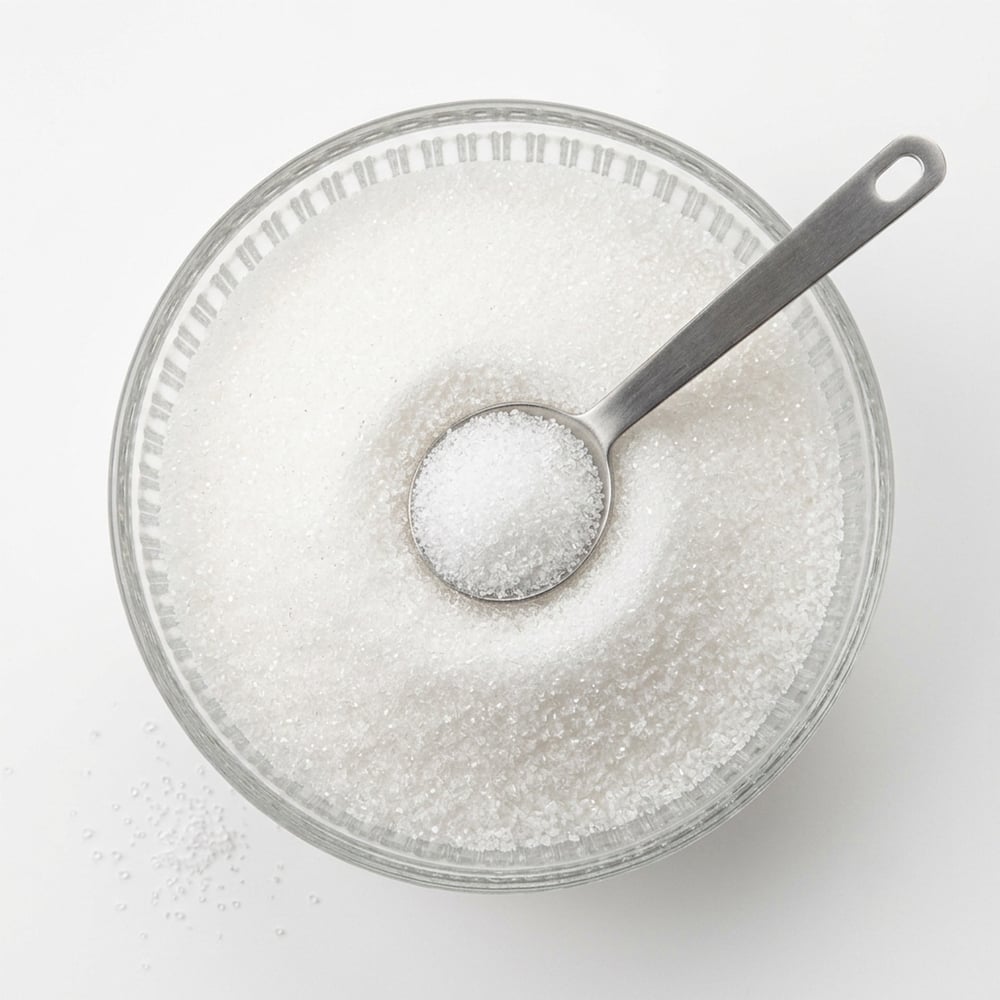
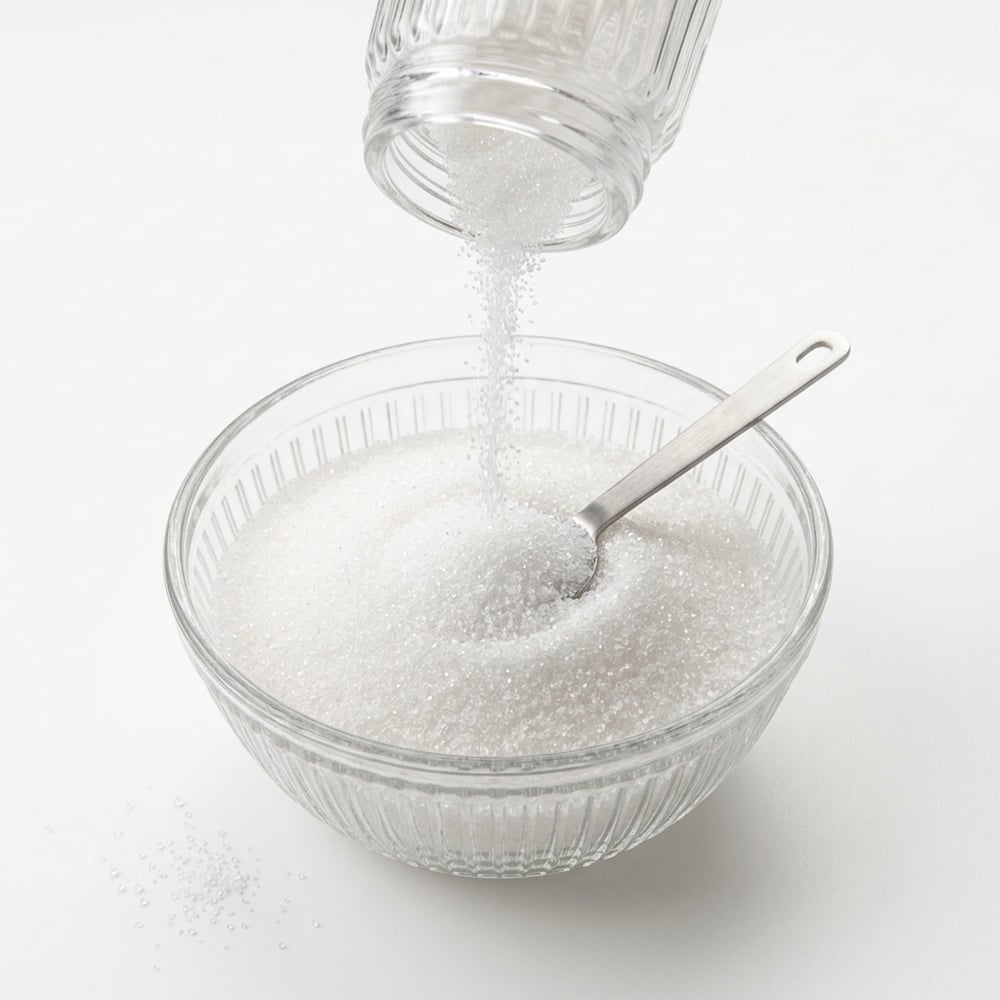
Sorbitol powder (D-Sorbitol) is a hexahydric sugar alcohol (polyol) produced by catalytic hydrogenation of glucose derived from cornstarch. It appears as a white, odorless, crystalline powder providing approximately 60% of sucrose sweetness at roughly 2.6 kcal/g (CAS No. 50-70-4). Available in multiple mesh grades — including Mesh 20 (H20) and Mesh 60 (H60) — sorbitol powder is used across pharmaceutical, food, and personal care manufacturing for its multifunctional properties: moisture retention, crystallization inhibition, cryoprotection, and bulking.
Most buyers who inquire about sorbitol powder are not simply sourcing a sweetener. They are sourcing a functional excipient or a texture-modifying humectant — and the grade, particle size, and quality system documentation matter considerably more than the base unit price.
The sugar-free and reduced-sugar reformulation trend has expanded the application range of sorbitol powder across multiple sectors. However, functional requirements differ meaningfully by application — selecting a grade based on an incorrect profile is a common and avoidable procurement error.
For direct compression tableting, the H20 grade provides particle size and flow characteristics that support consistent die fill and tablet hardness. In wet granulation, the H60 grade's finer particle distribution enables more uniform binder distribution and faster dissolution. In both cases, pharmacopoeia-aligned documentation — USP/NF or EP certificates of analysis, batch records, and metal detection logs — is typically required for pharmaceutical supplier qualification. Buyers evaluating sorbitol powder as a pharmaceutical excipient should confirm which pharmacopoeia governs their target market before finalizing grade selection.
The mild cooling sensation and non-cariogenic sweetness of crystalline sorbitol powder make it a practical co-excipient in chewable and effervescent tablets. In these applications, moisture control is critical: hygroscopicity can accelerate effervescent tablet hardness loss if incoming moisture is not verified batch by batch. Batch-to-batch consistency in moisture content — not just average purity — is the relevant specification for this application.
In sugar-free hard candy, chewing gum, and coatings, sorbitol powder acts as a bulking agent, humectant, and crystallization inhibitor. One common misconception: this polyol at approximately 60% of sucrose sweetness does not mean a direct 1:1 volumetric replacement will deliver equivalent sensory results. Changes in water activity, bulk density, and mouthfeel require a formulation adjustment — not a simple weight-ratio substitution. In industrial bakery, its moisture-retaining properties slow starch retrogradation and extend shelf life under normal distribution conditions.
Crystalline sorbitol powder is a well-established humectant and non-cariogenic sweetener in toothpaste and mouthwash formulations. In oral care applications, grade purity and microbiological specifications are as important as sweetness performance. Buyers in this segment typically source food-grade or pharmaceutical-grade material rather than industrial-grade supply.
In surimi and frozen fish applications, sorbitol powder functions as a cryoprotectant, reducing protein denaturation during deep-freeze storage and thaw cycles. Dissolution speed matters here — coarser grades may require additional mixing time to achieve uniform distribution in wet processing lines.
Grade selection for sorbitol powder should be driven by three factors: application process requirements, target market regulatory standards, and documentation scope.
Sorbitol powder sourced from a manufacturer with dedicated corn-based sugar alcohol production carries a different supply stability profile than material purchased through a general chemical trading company. For buyers operating dual-market supply chains — serving both pharmaceutical and food manufacturing — a single qualified supplier covering pharmaceutical-grade sorbitol powder, mannitol, and xylitol simplifies supplier qualification audits and reduces documentation management across product lines.
A multi-grade sorbitol powder range spanning different mesh grades allows procurement teams to consolidate purchases across application requirements without managing multiple supplier relationships. Specification sheets, form comparison guides, and application-specific handling documentation for each grade are available upon inquiry. For buyers evaluating total landed cost for ASEAN market imports, Guangdong-origin shipments offer a logistics proximity advantage relative to inland production sources.
Supply consistency in the pharmaceutical excipient segment is measured not just in purity, but in particle size distribution reproducibility, batch documentation completeness, and quality system traceability. Mixing sorbitol powder batches from multiple suppliers — even at equivalent purity specifications — can introduce particle size and moisture variation that surfaces during production rather than in incoming QC. Consolidating supply to a qualified pharmaceutical-grade source reduces this variability risk, though any supplier change in a regulated application requires formal re-qualification through your own quality process.

 EN
EN