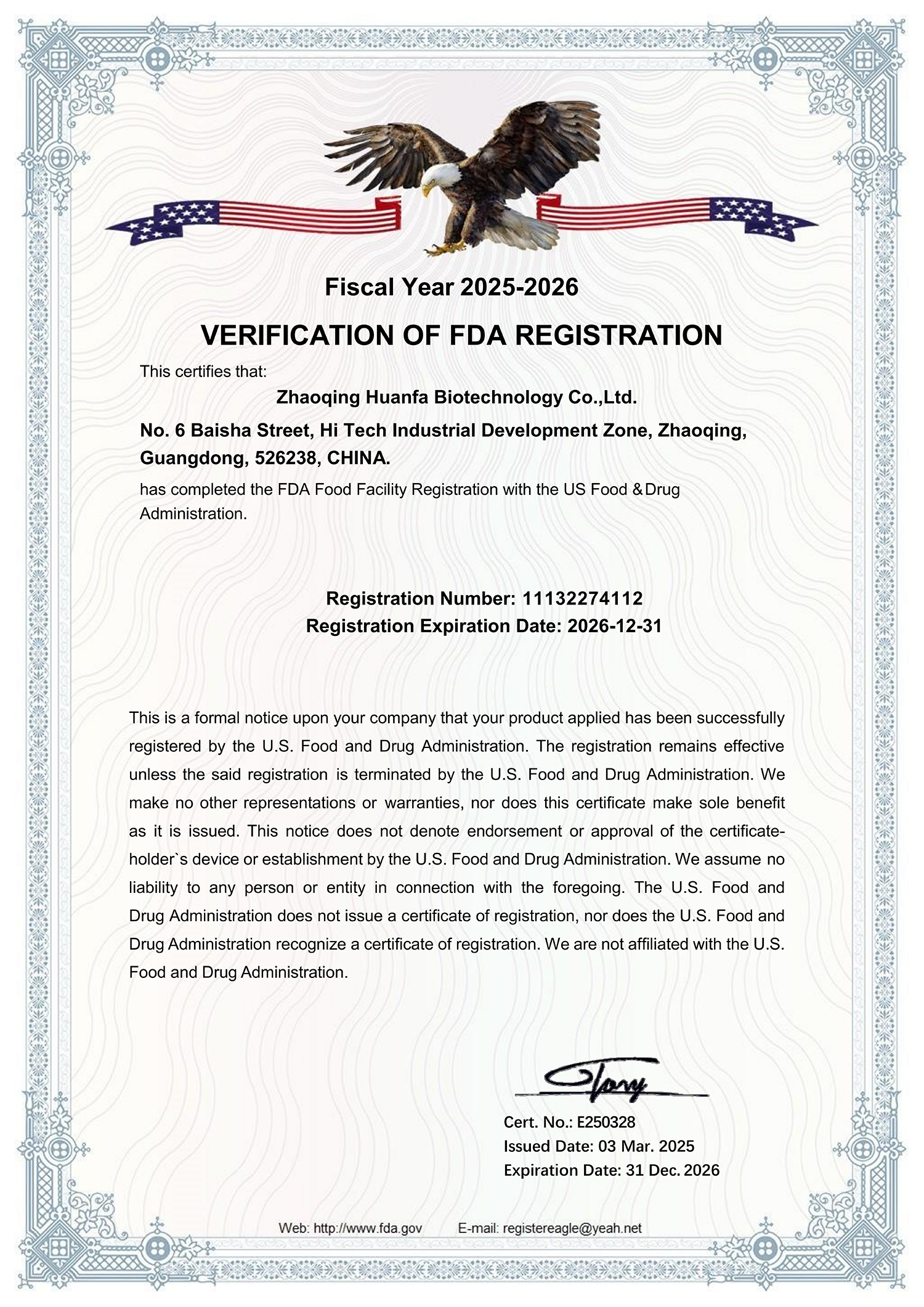
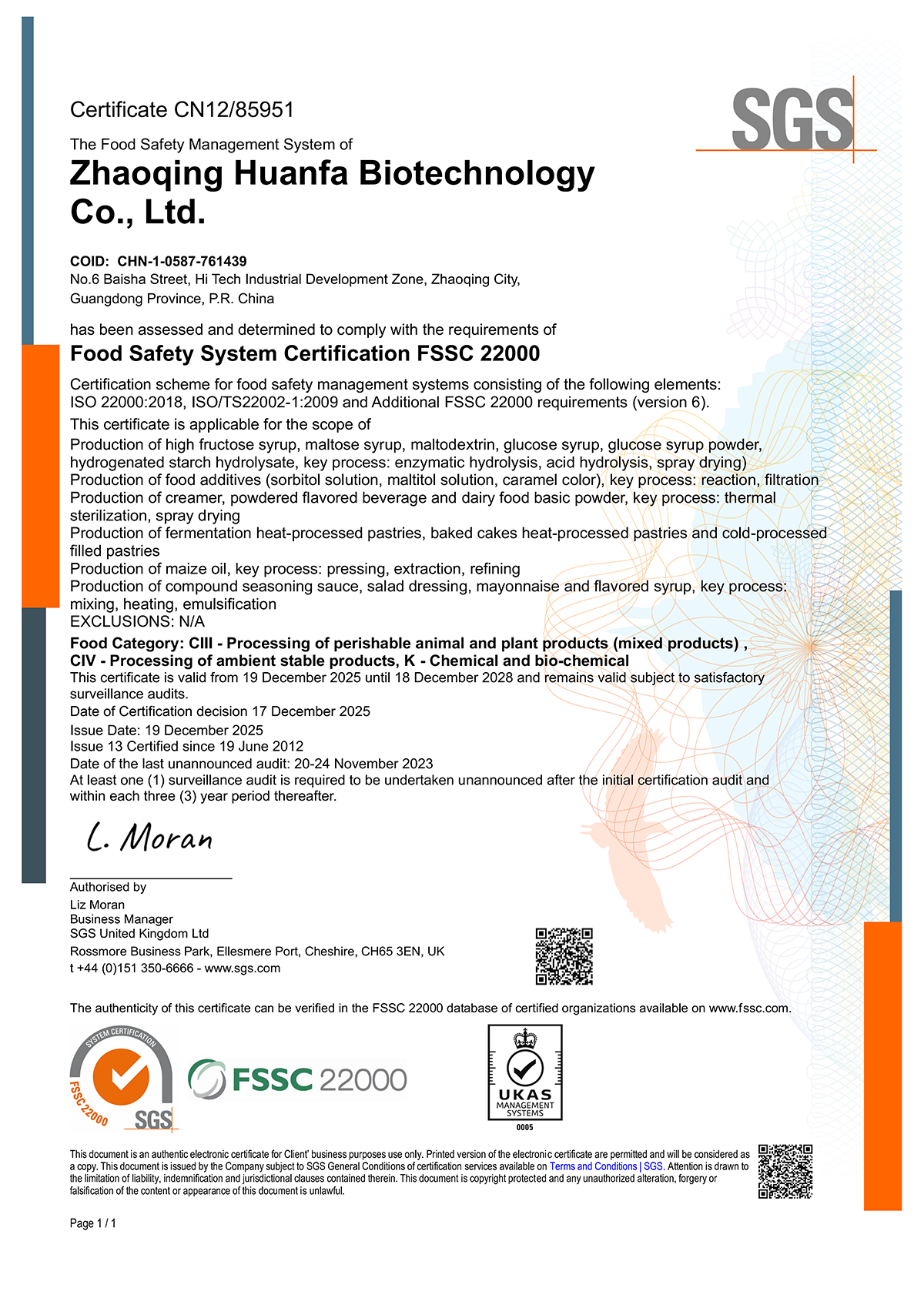
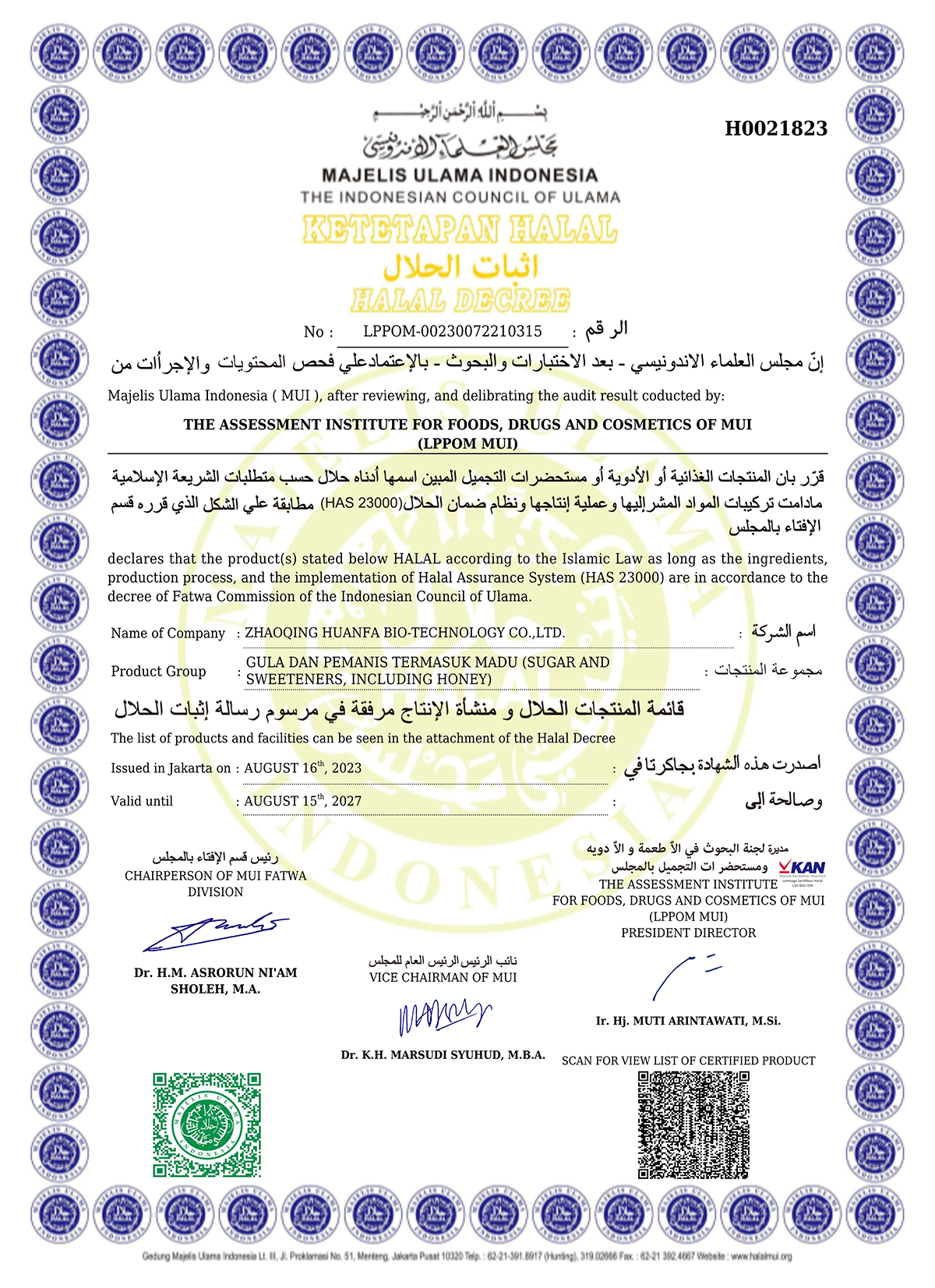
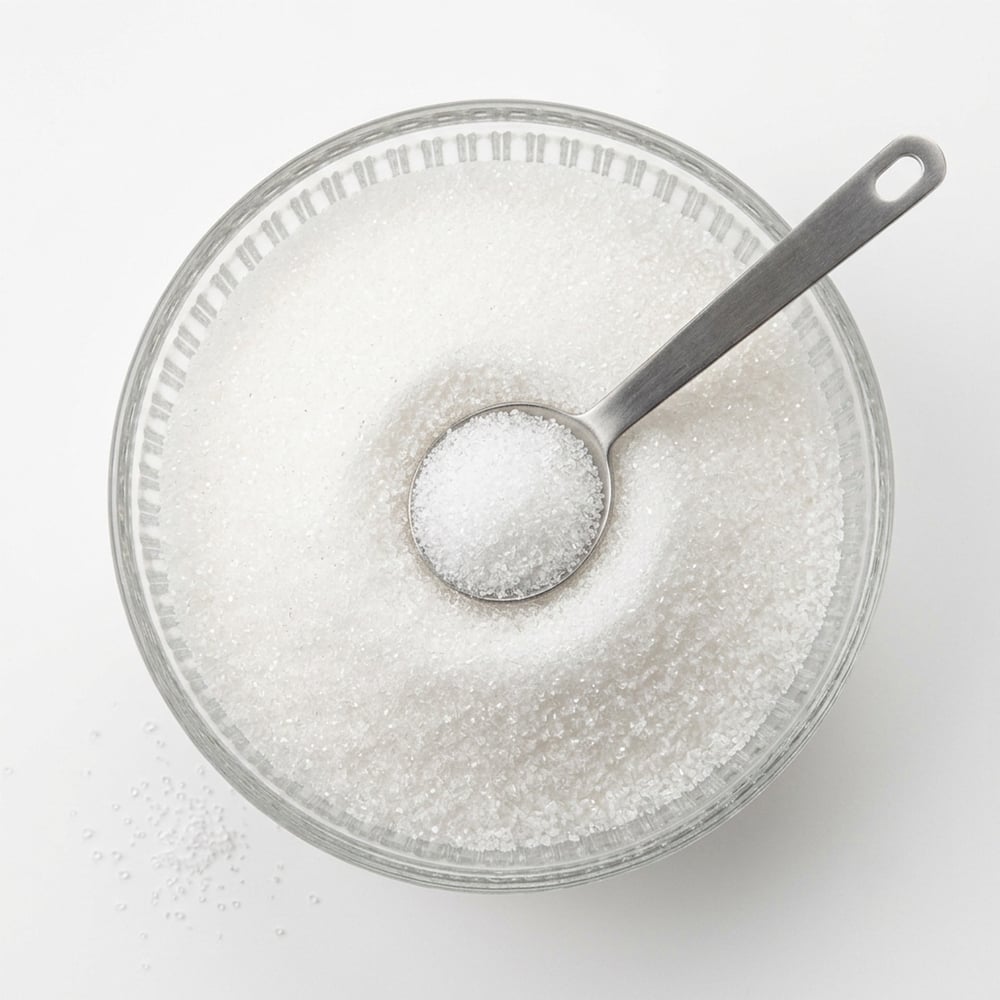
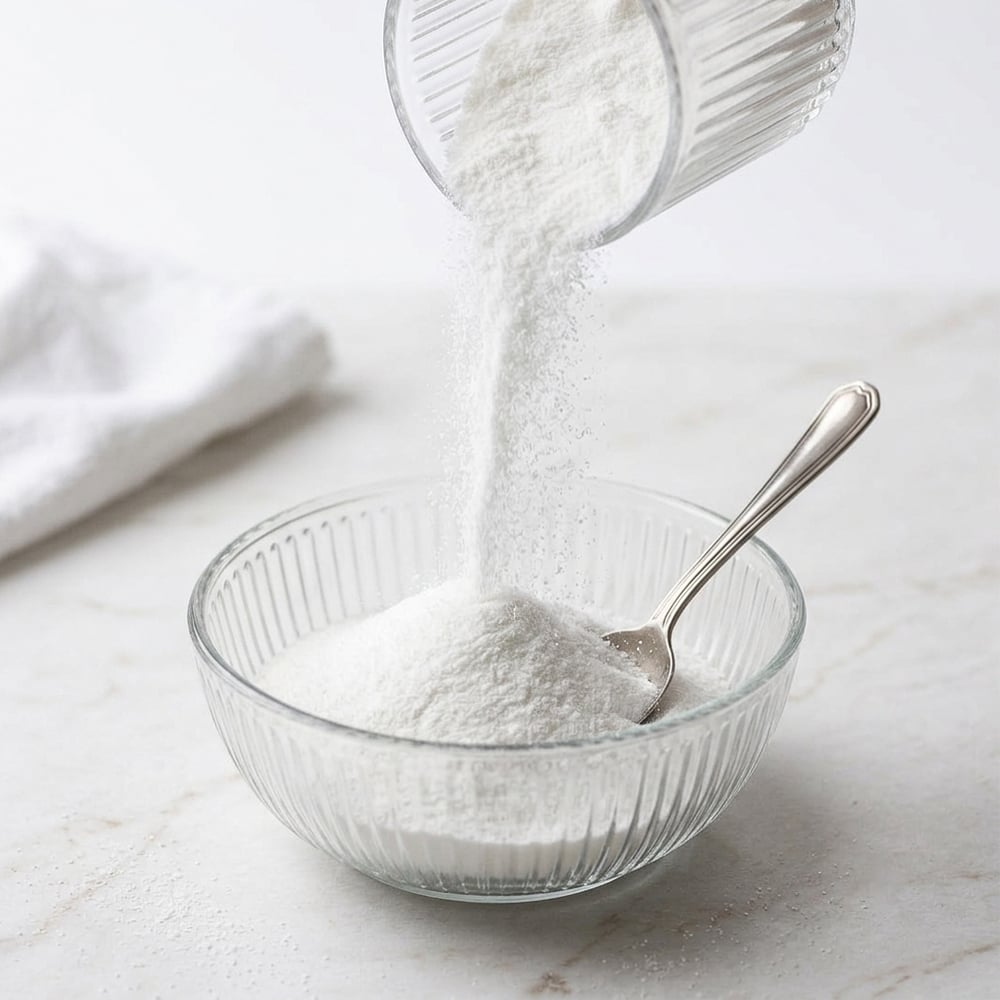
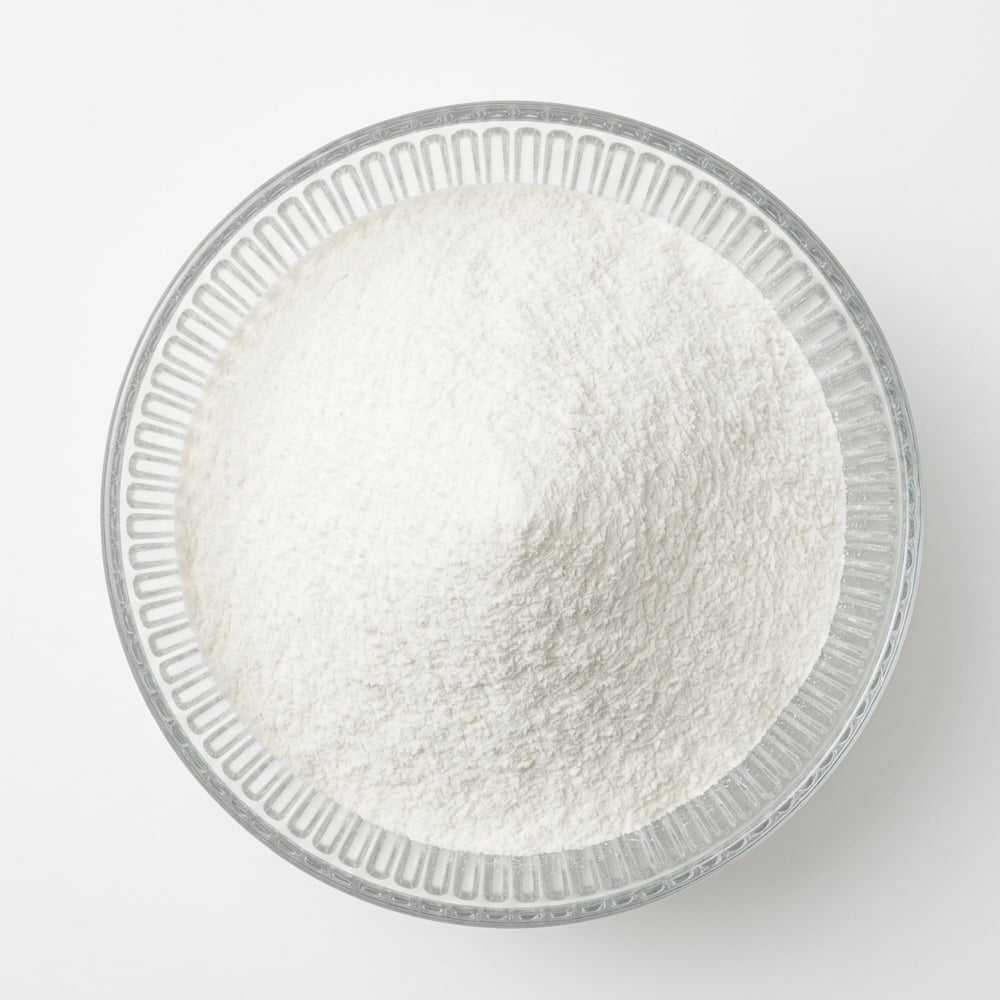
Huanfa Biotechnology's Glucose Syrup Powder (Spray Dried Glucose) in two grades — DE 26–32 General Purpose and DE 29–31 High Purity / High Solubility. White free-flowing powder, instant cold-water dissolution, moderate sweetness. Ideal for instant beverages, bakery premixes, confectionery, soup & sauce powders, sports nutrition, and feed applications. Manufactured under FSSC 22000, ISO 9001, ISO 14001, Kosher & Halal certifications. Global shipping from Guangdong, China.
Glucose Syrup Powder (also known as Spray Dried Glucose) is a white, free-flowing powder produced by spray drying concentrated glucose syrup — converting the liquid starch hydrolysate into a stable, low-moisture, easily handled dry form. With a Dextrose Equivalent (DE) in the 26–32 range, this product occupies the functional middle ground between maltodextrin (DE ≤ 20) and standard glucose syrup solids (DE 42+): it retains the clean sweetness, fermentability, and humectancy of glucose syrups while delivering the instant dissolution and carrier functionality that powder-form ingredients demand.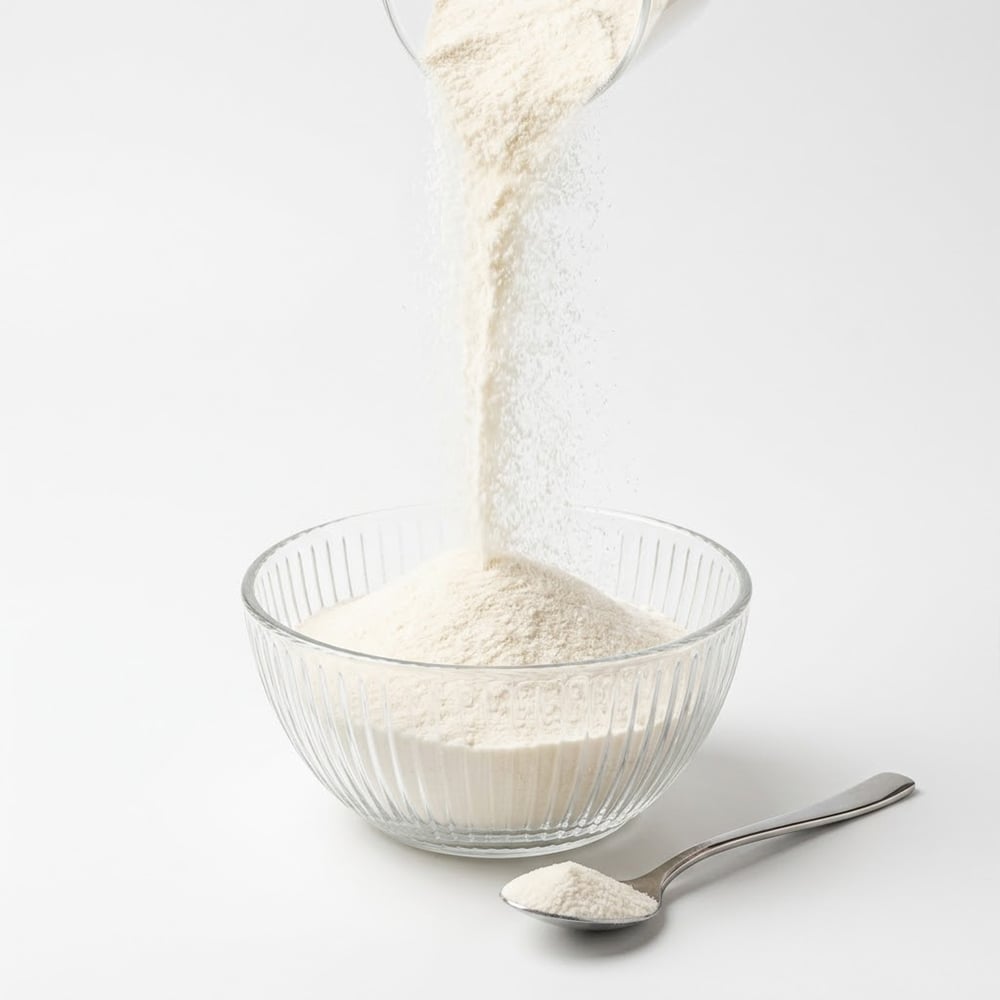
At Huanfa Biotechnology, glucose syrup powder is manufactured from in-house glucose syrup produced from non-GMO corn starch. The syrup is concentrated, atomised, and dried in a controlled spray-drying tower to produce hollow, porous, spherical particles that re-dissolve almost instantly in cold water — a processing advantage over drum-dried glucose powders, which produce denser, irregular flakes that hydrate more slowly. The result is a product that combines rapid reconstitution, consistent particle morphology, and full traceability from corn to finished powder.
Huanfa offers two specifications to match different formulation priorities:
DE 26–32 (General Purpose): A versatile, cost-effective grade for standard food, beverage, and feed applications where moderate DE tolerance is acceptable.
DE 29–31 (High Purity / High Solubility): A tightly controlled, narrow-DE grade (tolerance ±1) with enhanced clarity, solubility, and batch-to-batch consistency — specified where dissolution speed, purity, and process reproducibility are critical.
Both grades are manufactured under a single integrated quality system certified to FSSC 22000, ISO 9001:2015, ISO 14001:2015, Kosher, and Halal standards, and both ship with a complete Certificate of Analysis covering all physicochemical and microbiological parameters.
Two Grades — How to Choose
| Dimension | DE 26–32 (General Purpose) | DE 29–31 (High Purity / High Solubility) |
| DE range | 26–32 (tolerance ±3) | 29–31 (tolerance ±1) |
| Sweetness | Moderate | Moderate, more consistent |
| Cold-water dissolution | Fast | Near-instant — optimised particle porosity |
| Solution clarity | Clear | Crystal-clear, minimal haze |
| Batch-to-batch consistency | Good | Excellent — narrow-DE process control |
| Purity profile | Standard | Enhanced — tighter reducing sugar and ash control |
| Best applications | General food, bakery, feed, cost-sensitive blends | Premium beverages, sports nutrition, pharma-adjacent, instant premium mixes |
| Price positioning | Economy | Premium |
Rule of thumb: Choose DE 26–32 when cost efficiency and functional adequacy are the priority. Choose DE 29–31 when your process demands a narrow, reproducible DE window and the fastest possible dissolution — for example, high-speed instant beverage lines or formulations where osmolality and sweetness must remain constant from batch to batch.
Instant cold-water dissolution: Hollow, porous spray-dried particles rehydrate in seconds — no lumps, no sediment, no waiting. Critical for instant beverage powders, stick packs, and on-the-go nutrition formats.
Moderate clean sweetness: At DE 26–32, the product is noticeably sweeter than maltodextrin but less sweet than standard glucose solids (DE 42+) — a balanced sweetness that complements, rather than dominates, flavour systems.
Carrier and bulking functionality: Provides bulk, body, and free-flowing character to dry blends — the structural backbone of powdered mixes where a soluble carbohydrate carrier is required.
Humectancy and texture contribution: Glucose components bind water, contributing moisture retention and mouthfeel in baked goods, bars, and fillings.
Fermentability and browning: Glucose-based solids participate in yeast fermentation and Maillard browning — supporting crust colour development in bakery and consistent fermentation in brewing-adjacent applications.
Low hygroscopicity (powder form): Compared with liquid glucose syrups, the dried form is stable and free-flowing under normal storage conditions, simplifying logistics and reducing freight cost per unit of solids.
Clean-label friendly: A simple starch-derived ingredient — recognisable, pronounceable, and accepted in most clean-label programmes.
DE 26–32 General Purpose Grade
| Parameter | Specification | Test Method |
| Appearance | White to off-white free-flowing powder | Visual |
| Odour & Taste | Bland, slightly sweet; no off-flavours | Organoleptic |
| Dextrose Equivalent (DE) | 26–32 | Lane-Eynon Titration |
| Moisture | ≤ 5.0% | Oven Drying (105°C) / Karl Fischer |
| pH (5% solution) | 4.5–6.5 | pH Meter |
| Cold-water solubility | ≥ 95% | Gravimetric (25°C) |
| Bulk Density (tapped) | 450–650 g/L | Tapped Density |
| Sulfated Ash | ≤ 0.3% | Muffle Furnace |
| SO₂ Residue | ≤ 10 mg/kg | Distillation–Titration |
| Protein | ≤ 0.3% | Kjeldahl |
DE 29–31 High Purity / High Solubility Grade
| Parameter | Specification | Test Method |
| Appearance | White free-flowing powder | Visual |
| Odour & Taste | Bland, clean; no off-flavours | Organoleptic |
| Dextrose Equivalent (DE) | 29–31 (±1) | Lane-Eynon Titration |
| Moisture | ≤ 4.5% | Oven Drying (105°C) / Karl Fischer |
| pH (5% solution) | 4.5–6.0 | pH Meter |
| Cold-water solubility | ≥ 98% | Gravimetric (25°C) |
| Solution clarity | Clear, minimal haze | Turbidimetric |
| Bulk Density (tapped) | 450–600 g/L | Tapped Density |
| Sulfated Ash | ≤ 0.1% | Muffle Furnace |
| SO₂ Residue | ≤ 5 mg/kg | Distillation–Titration |
| Protein | ≤ 0.2% | Kjeldahl |
| Reducing Sugars (as glucose) | Report on COA | Titration |
Heavy Metals & Microbiological Standards (Both Grades)
| Parameter | Specification |
| Arsenic (As) | ≤ 0.5 mg/kg |
| Lead (Pb) | ≤ 0.5 mg/kg |
| Total Plate Count | ≤ 3,000 CFU/g |
| Coliforms | ≤ 30 MPN/100g |
| Yeast & Mold | ≤ 50 CFU/g |
| E. coli | Negative / 10g |
| Salmonella | Negative / 25g |
Manufacturing Process — Spray Dried, Not Drum Dried
The functional performance of glucose syrup powder is determined by the drying technology:
Non-GMO Corn Starch → Liquefaction → Saccharification → Glucose Syrup
→ Refining & Ion-Exchange Purification → Concentration
→ Spray Drying (Atomisation + Hot-Air Drying)
→ Hollow, Porous Spherical Particles
→ Cooling → Screening → Metal Detection (CCP)
→ Packaging (Moisture-Barrier Bags)
→ Quality Release
Why spray drying matters: Spray drying produces hollow spheres with high surface area and porosity — particles that wet and dissolve almost instantly in cold water. Drum-dried glucose powders form dense flakes that require longer mixing and leave a perceptible grit in finished beverages. For instant products, this is the difference between "just add water" and "blend for two minutes."
Shelf Life & Storage
| Parameter | Detail |
| Shelf Life | 24 months from date of manufacture (sealed original packaging) |
| Storage Conditions | Cool, dry, ventilated; 15–25°C; ≤ 60% relative humidity |
| Moisture Sensitivity | Hygroscopic — keep in sealed moisture-barrier packaging; use promptly once opened |
| Handling Note | Avoid prolonged exposure to humid air; use desiccant in humid climates |
Packaging Options
| Packaging Type | Net Weight | Best Suited For |
| Multi-wall kraft paper bag with PE inner liner — Standard | 25 kg/bag | Food manufacturing, warehousing, container shipping |
| Aluminium-foil-lined kraft bag (recommended, high humidity) | 25 kg | Tropical destinations, extended storage |
| Big bag / FIBC | 500–1,000 kg | High-volume dry blending lines |
| Custom / private label | Per inquiry | OEM and distributor formats |
All palletized packaging uses fumigated, ISPM-15 compliant pallets with stretch wrap.
1. Instant Beverage Powders
Instant coffee & coffee whiteners: Provides body, mouthfeel, and rapid dissolution in 3-in-1 and cappuccino powders.
Milk tea & flavoured drink powders: Instant dispersant that prevents clumping of fine particulates; contributes smooth mouthfeel.
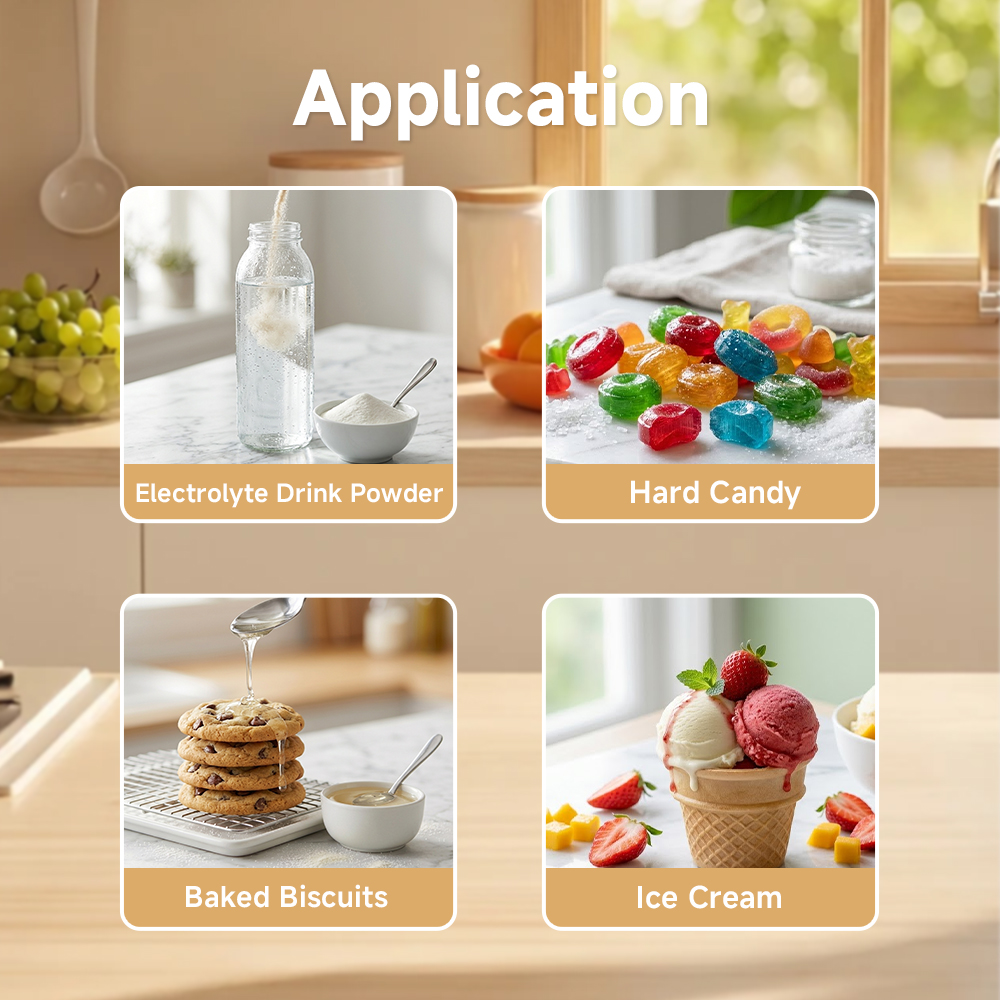
Sports & electrolyte drinks: Rapid-energy carbohydrate with clean dissolution and moderate osmolality.
Fruit-flavoured instant drinks: Quick, clear reconstitution without residual powder grit.
2. Bakery & Premixes
Cake, muffin & bread premixes: Bulk sweetener and moisture-management component; Maillard browning supports crust colour.
Biscuit & cookie formulations: Controlled sweetness and texture; consistent moisture retention over shelf life.
Glazes and icings: Rapid dissolution and body for powdered icing and glaze systems.
3. Confectionery
Hard candy & chews: Partial sucrose replacement with reduced crystallisation risk.
Powdered confectionery coatings: Fine-particle bulk sweetener for dusting and coating applications.
Chewing gum: Powder-form sweetener and bulking component.
4. Savory Powders — Soups, Sauces & Seasonings
Dehydrated soup & sauce mixes: Rapid reconstitution, body, and clean flavour platform.
Instant noodle seasoning packets: Bulk carrier for salt, spices, and flavour particulates.
Bouillon & gravy powders: Soluble carbohydrate base that dissolves cleanly in hot water.
5. Sports Nutrition & Nutritional Products
Carbohydrate energy powders: Moderate-GI energy source for pre- and post-workout formulations.
Meal replacement & protein powders: Improves mixability of protein isolates; contributes clean carbohydrate energy.
Mass gainers: High-calorie carbohydrate matrix.
6. Dairy & Frozen Desserts
Ice cream & frozen desserts: Freezing point depression and texture contribution.
Yogurt & dairy drink powders: Body, sweetness, and instant dispersion.
7. Feed & Pet Food
Animal feed premixes: Highly digestible carbohydrate energy carrier.
Pet food (dry & treats): Binder, energy source, and palatability support in extruded and baked formats.
Applications by Industry Sector — At a Glance
| Industry Sector | Primary Function | Typical Usage |
| Instant Beverages | Dispersant, body, energy | 20–50% of dry blend |
| Bakery & Premixes | Bulk sweetener, browning, moisture control | 5–20% of formulation |
| Confectionery | Sweetness, bulk, crystallisation control | 10–40% of sweetener solids |
| Savory Powders & Seasonings | Soluble carrier, mouthfeel | 20–40% of dry mix |
| Sports Nutrition | Rapid-energy carbohydrate | 30–70% of carbohydrate fraction |
| Dairy & Frozen Desserts | Freezing point, texture, body | 3–10% of formulation |
| Feed & Pet Food | Digestible energy, binder | 2–15% of formulation |
Why Source Glucose Syrup Powder from Huanfa Biotechnology?
1. Vertically Integrated — From Corn to Powder
Huanfa produces its own glucose syrup from non-GMO corn starch within a 250,000-square-metre integrated facility (1 million metric tons annual starch-derivative capacity). The syrup is concentrated and spray dried in-house — no third-party drying, no intermediate handling, complete lot-level traceability from starch lot to finished powder.
2. Two Grades, One Supplier
DE 26–32 General Purpose for cost-sensitive applications, DE 29–31 High Purity for premium, consistency-critical formulations — both from a single supplier with one quality agreement, simplifying procurement and qualification.
3. Spray-Dried, Not Drum-Dried
Hollow porous particles deliver the instant dissolution that drum-dried products cannot match — the functional difference that matters most in instant beverage and premium powder applications.
4. Internationally Recognized Certifications
FSSC 22000 — GFSI-benchmarked food safety system
ISO 9001:2015 — Quality management system
ISO 14001:2015 — Environmental management system
Kosher & Halal Certified
Non-GMO — Verified corn feedstock
5. Global Brand Track Record
Huanfa's starch derivatives are trusted by Mars Wrigley, Nestlé, Heinz, Perfetti Van Melle, Unilever, Procter & Gamble, and Colgate-Palmolive.
6. Strategic Location & Logistics
Three hours from Guangzhou, Shenzhen, and Hong Kong ports — competitive ocean freight with weekly sailings to all major markets; bagged palletized container shipping.
Q: What is the difference between glucose syrup powder and spray dried glucose?
A: They refer to essentially the same product. "Glucose Syrup Powder" is the general category name; "Spray Dried Glucose" specifies the drying technology. Huanfa's glucose syrup powder is produced by spray drying — hollow, porous particles that dissolve almost instantly in cold water, unlike drum-dried glucose powders which form dense flakes that hydrate slowly.
Q: How does DE 26–32 glucose syrup powder differ from maltodextrin?
A: Maltodextrin has DE ≤ 20 and is essentially non-sweet — a pure carrier and bulking agent. DE 26–32 glucose syrup powder has moderate sweetness, contributes fermentable and browning sugars, and provides humectancy — it is a functional sweetener-builder, not just a carrier.
Q: Which grade should I choose?
A: For general food, bakery, confectionery, and feed applications, DE 26–32 delivers cost-efficient performance. For premium instant beverages, sports nutrition, and any process where sweetness and osmolality must stay constant batch-to-batch, choose DE 29–31 High Purity / High Solubility.
Q: What are the MOQ, shelf life, and lead time?
A: MOQ: 25 kg sample; one 20-foot container (~18–20 MT bagged) for commercial. Shelf life: 24 months. Lead time: 15–20 days.
Q: Can Huanfa supply a custom DE specification?
A: Yes — our production can target specific DE windows within the 20–40 range. Contact our R&D team with your target specification.

 EN
EN