
 EN
EN
How Is Corn Starch-based Maltodextrin Different from Regular Sweeteners?
When a formulation calls for carbohydrate solids, it is easy to group every white powder under the label “sweetener.” That shortcut causes trouble in purchasing and product development. Corn Starch-Based Maltodextrin starts with corn starch, but its job in a recipe is often very different from the job of sucrose, glucose, or high-intensity sweeteners. It is commonly selected for body, carrier performance, dispersion, and process control rather than for a strong sweet taste.
For buyers comparing ingredients, the useful question is not simply whether an ingredient contains carbohydrate. The better questions are: how far has the starch been hydrolyzed, how sweet does it taste, how does it behave in water, and what role does it play in the finished system? Those distinctions help teams specify the right material and avoid substituting one carbohydrate powder for another without a functional review.
Start with the raw material and the process
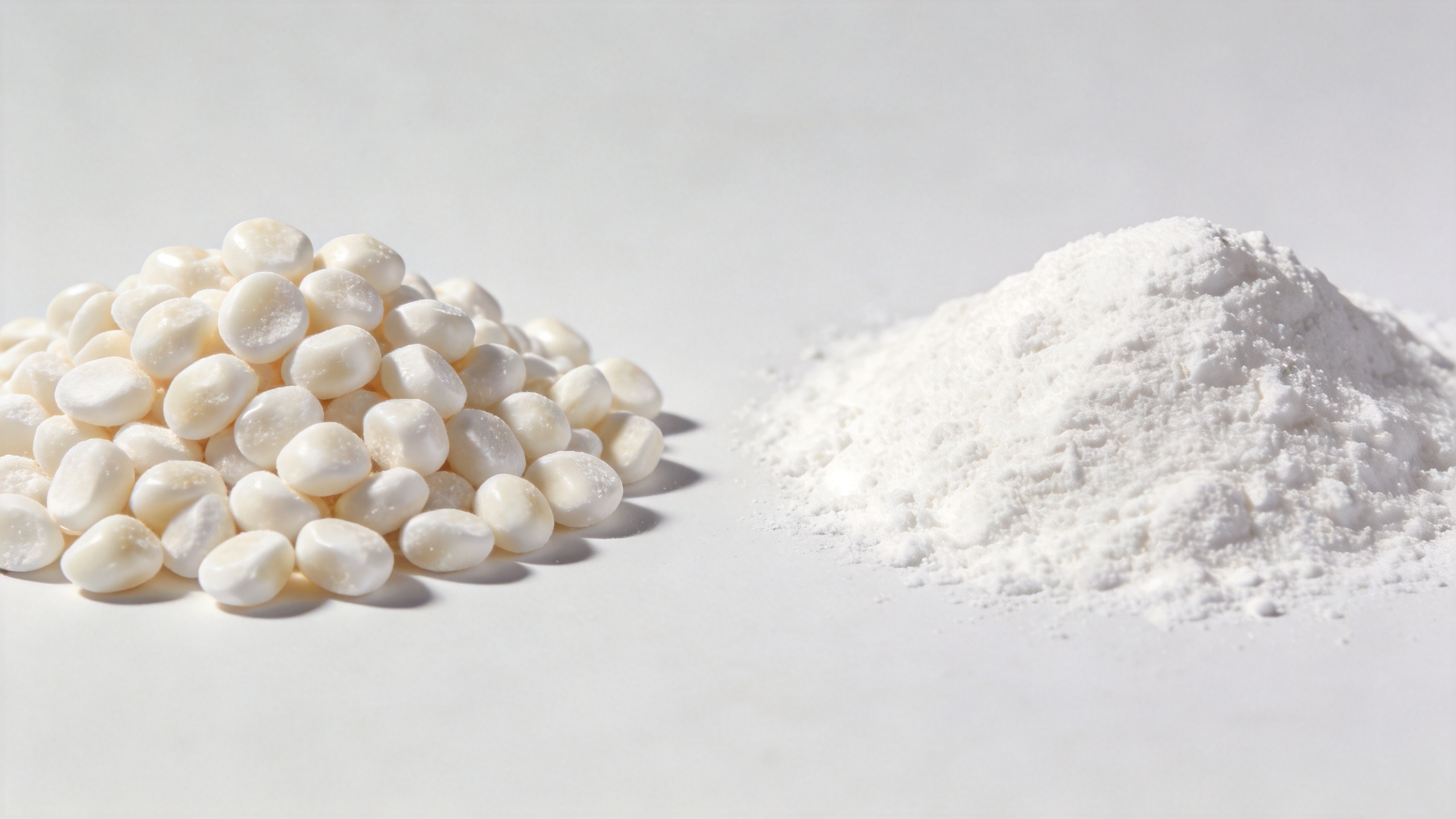
Corn starch is a large-carbohydrate polymer made of glucose units. To make Corn Starch-Based Maltodextrin, processors break that starch into shorter chains through controlled hydrolysis, often using enzymes. The result is still a carbohydrate ingredient, but it is no longer native corn starch. The shorter chains change how the powder dissolves, handles moisture, and contributes solids in a formulation.
That source matters for traceability and sourcing discussions. It does not mean every corn-derived ingredient behaves the same way. Native corn starch thickens when cooked and gelatinized; a corn-derived maltodextrin is typically designed to disperse or dissolve more readily. Regular sweeteners, meanwhile, may be sucrose, dextrose, fructose, syrups, or high-intensity sweeteners. Their common purpose is usually sweetness, although they can also affect texture, browning, freezing point, or bulk.
Dextrose equivalent explains part of the difference
A practical technical measure for maltodextrin is dextrose equivalent, or DE. It indicates the extent to which starch has been hydrolyzed. Maltodextrins are commonly described as starch hydrolysates with a DE below 20. A lower DE generally indicates longer carbohydrate chains; a higher DE indicates more breakdown into shorter chains. DE is not a complete specification, but it is a useful starting point when comparing grades.
As DE rises within a starch-hydrolysate range, perceived sweetness and reducing-sugar behavior tend to rise as well. Even so, Corn Starch-Based Maltodextrin is normally much less sweet than sucrose or dextrose. That is why it can add solids and manage texture without pushing a beverage, seasoning, or dry mix toward an overly sweet profile. A specification should still be reviewed grade by grade, because DE, moisture, particle size, and application conditions all affect performance.
Sweetness is only one formulation property
| Property | Corn Starch-Based Maltodextrin | Regular sweeteners |
|---|---|---|
| Primary role | Often adds body, carrier capacity, solids, or process support | Usually provides noticeable sweetness; some also add bulk |
| Taste impact | Typically mild to low sweetness, depending on grade | Ranges from moderate sweetness to very intense sweetness |
| Origin and structure | Partially hydrolyzed corn starch with glucose-chain fragments | May be sucrose, glucose, fructose, syrups, or non-nutritive compounds |
| Water behavior | Often selected for dispersion or solubility in dry and liquid systems | Varies widely by sweetener and concentration |
| Typical buying question | Which grade delivers the target body and processing behavior? | Which ingredient reaches the target sweetness and label objective? |
In other words, substituting Corn Starch-Based Maltodextrin for sugar on a one-to-one basis is rarely a sound assumption. A formula that needs sweetness may require a sweetener system. A formula that needs a carrier for flavors, a bulking solid, or a more rounded mouthfeel may instead benefit from a maltodextrin grade chosen for that function.
Why formulators use it when they do not want extra sweetness
In powdered foods and beverages, an ingredient can need to carry flavor, improve handling, contribute solids, or help create a consistent reconstitution experience. Corn Starch-Based Maltodextrin can be useful because it contributes carbohydrate solids with a restrained flavor profile. This gives a development team room to tune sweetness separately rather than letting the bulking ingredient dominate the sensory result.
It can also be considered in seasoning systems, bakery mixes, confectionery processing, dairy-style powders, and other applications where powder flow, dispersion, or solids management matter. The correct use level is application-specific. Processing temperature, shear, acidity, water activity, and the other solids in the formula can change the outcome, so bench testing remains essential.
What it does not automatically mean
“Corn starch-based” describes the source material; it is not a universal performance promise. It does not by itself establish a specific DE, sweetness level, allergen position, non-GMO claim, organic status, or regulatory suitability in a destination market. Those details belong in the product specification, certificate package, and local compliance review.
It is also important not to turn a functional comparison into a health claim. Both maltodextrin and conventional nutritive sweeteners are digestible carbohydrates, but their nutritional role depends on the overall food, portion, formulation, and applicable labeling rules. For consumer-facing claims, consult qualified regulatory and nutrition professionals rather than relying on a generic ingredient comparison.
A buyer’s checklist for comparing grades
- Confirm the function first: Is the goal sweetness, bulk, carrier performance, texture, or powder processing?
- Request DE and moisture data: These help frame expected sweetness and handling behavior.
- Review solubility in the real system: Test at the intended temperature, concentration, and processing sequence.
- Check sensory impact: Evaluate sweetness, body, and any interaction with flavors or acids.
- Verify documentation: Align source, specification, microbiological limits, and market requirements before approval.
The practical takeaway
Corn Starch-Based Maltodextrin is more accurately understood as a controlled corn-starch hydrolysate that often supports formulation function more than it supplies sweetness. Regular sweeteners are usually chosen to make a product taste sweet; maltodextrin is more often chosen to manage solids, body, carrier behavior, or processing while keeping sweetness relatively low. Comparing DE, application performance, and specification data will lead to a more useful sourcing decision than comparing ingredient names alone.
 Hot News