
 EN
EN
Liquefaction of Starch Sugar
China is a major producer and consumer of starch in the world, and starch sugar is an important product in the deep processing of starch. With the reform and opening up and the improvement of people's living standards, China's starch industry has achieved rapid development, with continuous technological innovation, expanding industrial scale, and diversified product types. Starch and starch sugar are important components of current sugar technology, and their applications are extremely extensive.
Let's start with the liquefaction of starch!
As the name suggests, the liquefaction of starch first involves the original starch, which is produced from grains, potatoes, beans, and various plants without chemical treatment, as well as modified starch that has been treated by some method to change its original physical or chemical properties. Raw starch is a type of starch produced without any chemical treatment or alteration of its inherent physical and chemical properties. Original starch can be divided into four categories: cereal starch, potato starch, legume starch, and other types of starch. Raw starch can be used as various slurries, additives, sizing agents, fillers, adhesives, etc. It can also be used as raw materials for various modified starches, starch sugars, and starch derivatives. Our company mainly uses corn starch.
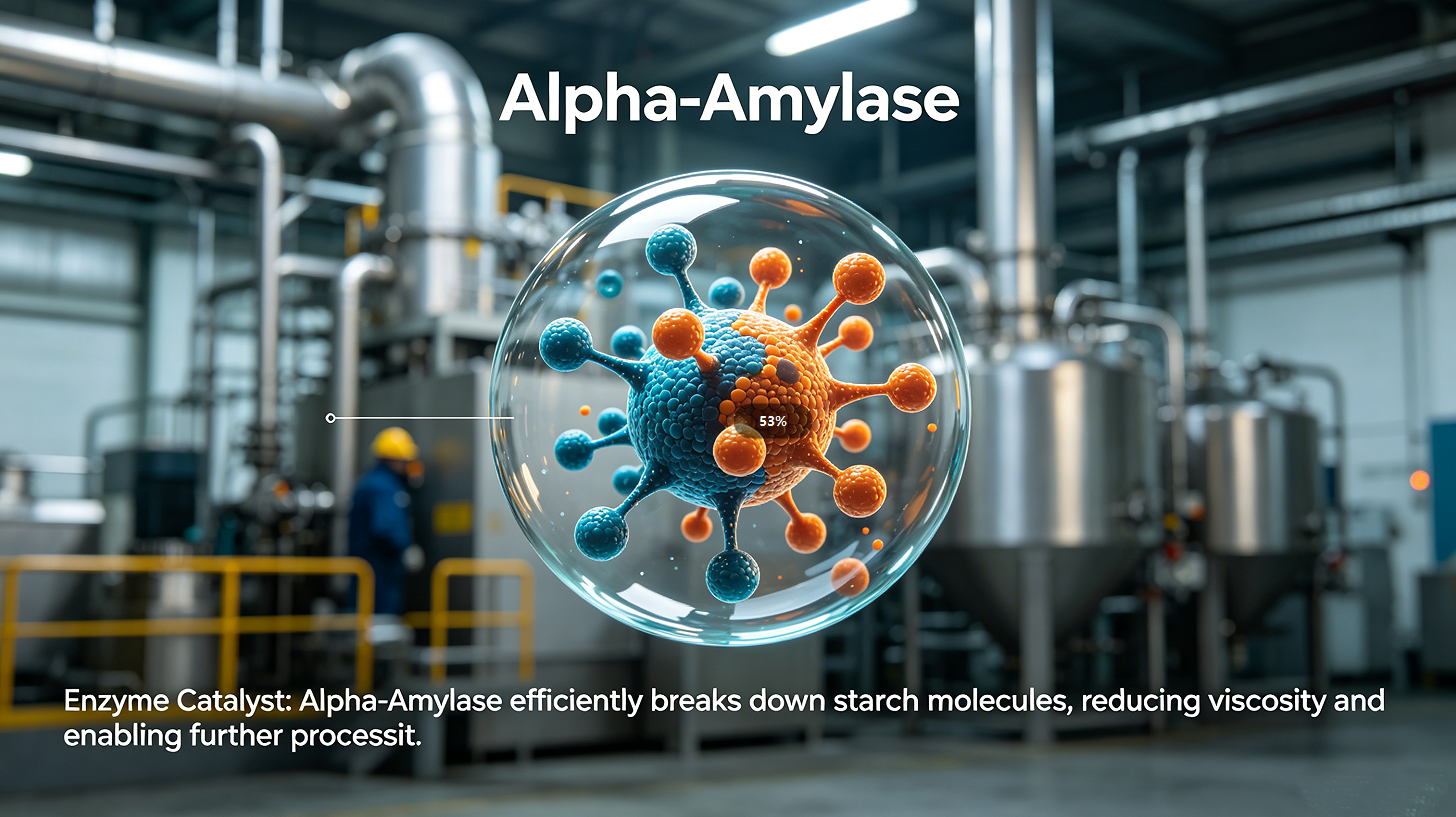
Of course, starch alone is far from enough, and enzymes need to be added as catalysts. Alpha amylase is a commonly used liquefying enzyme that hydrolyzes the a-1, 4 glycosidic bonds in starch and its hydrolyzed product molecules, causing molecular breakage and reducing viscosity. Alpha amylase belongs to endonucleases, and hydrolysis starts from the inside. It cannot hydrolyze the a-1,6 glycosidic bonds of amylopectin, but can continue to hydrolyze beyond these bonds. So where does alpha amylase come from? Alpha amylase preparations are mainly derived from bacteria, especially Bacillus subtilis, and can withstand liquefaction temperatures of 85-90 ℃; And another type of highly heat-resistant alpha amylase is derived from lichen type bacteria, which can withstand liquefaction temperatures of around 110 ℃.
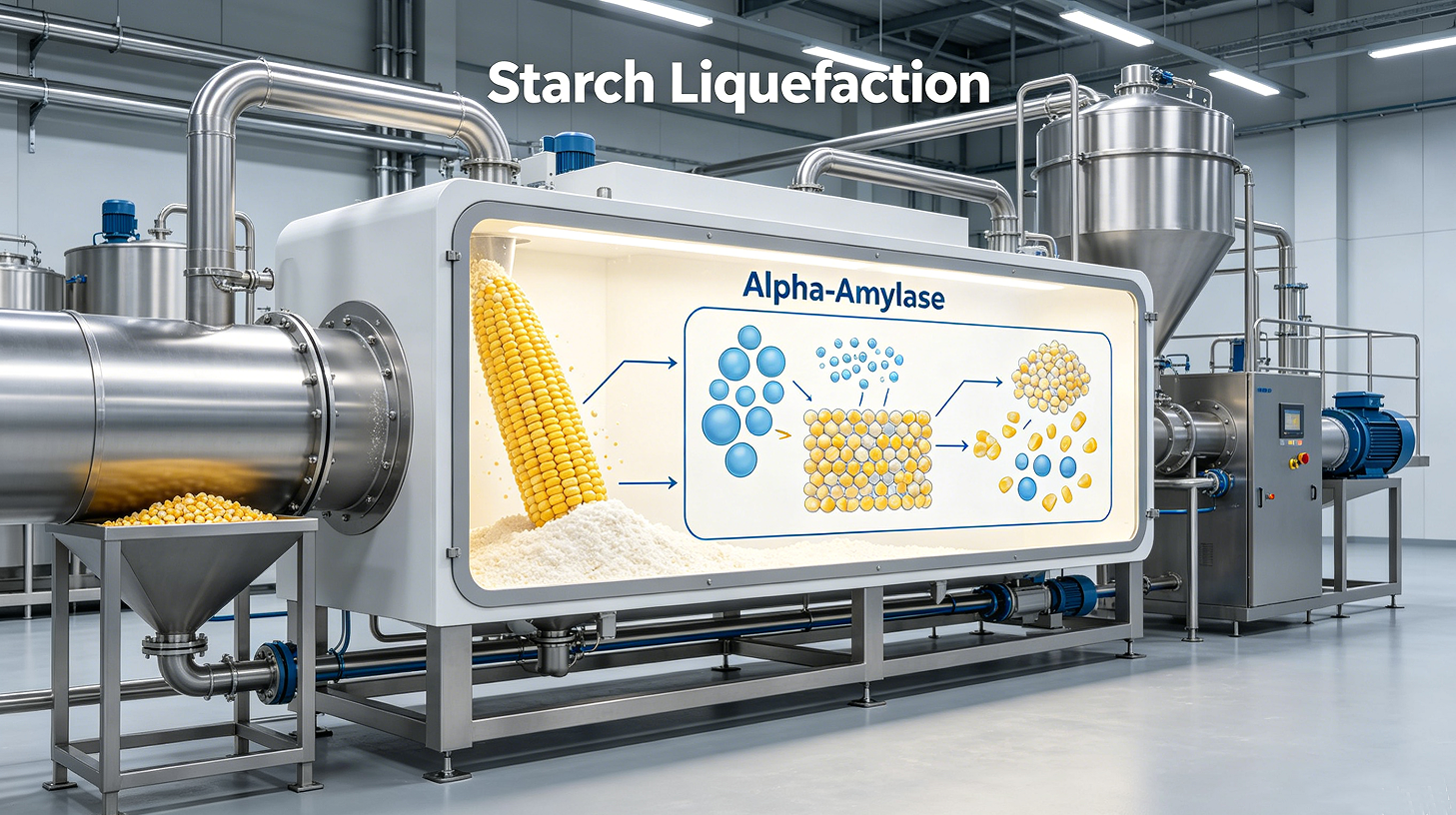
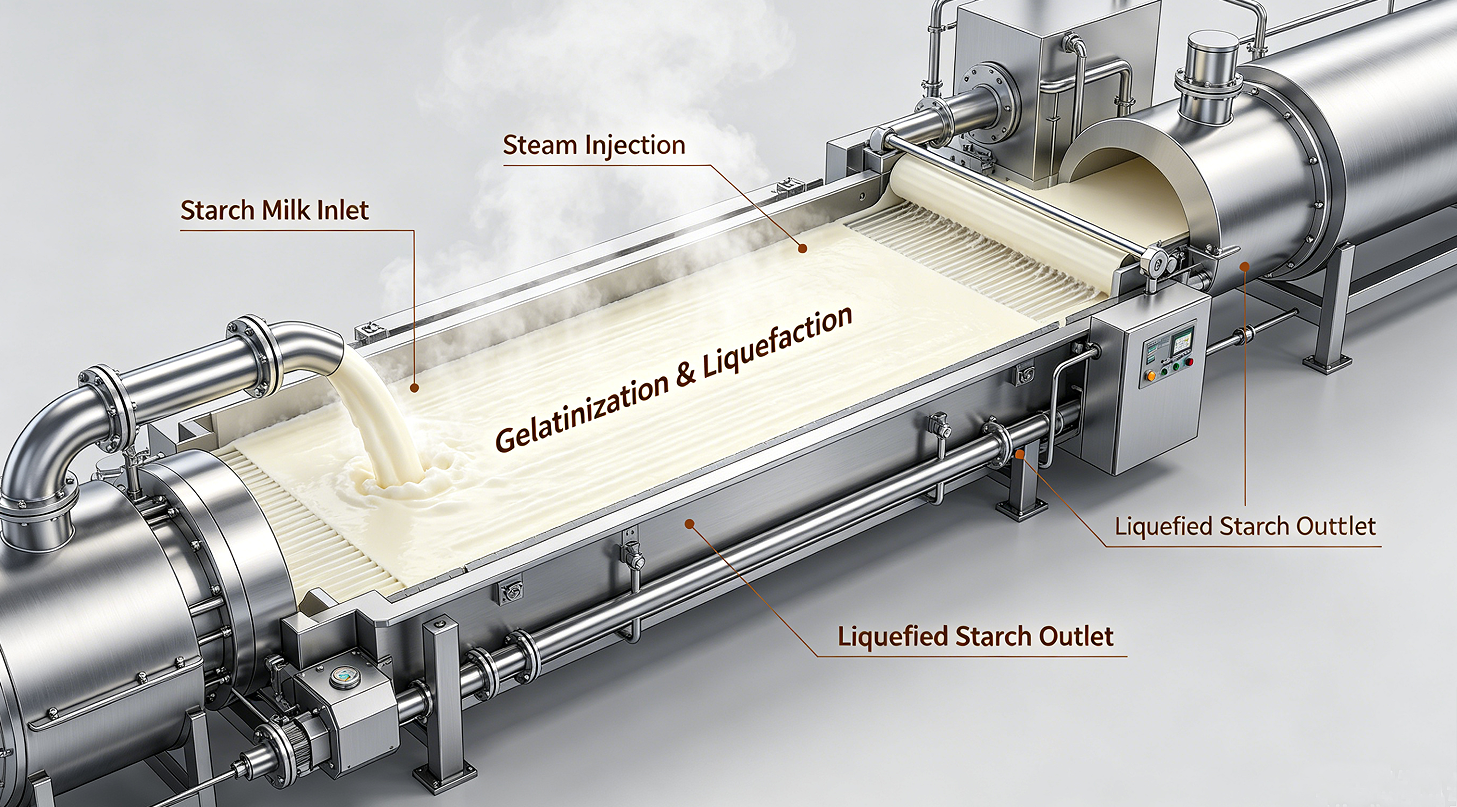
What kind of process is liquefaction? Our company mainly uses jet liquefaction, which involves directly injecting steam into the thin layer of starch emulsion to gelatinize and liquefy it. Firstly, preheat the starch emulsion to 80-90 ℃ through steam injection into the sprayer, and use a displacement pump to inject the starch emulsion. Steam is then injected into the thin layer of starch emulsion, causing gelatinization and liquefaction. The turbulence generated by steam jet heats the starch quickly and uniformly, and the viscosity decreases quickly. Enter the laminar flow column for insulation to achieve the desired degree of liquefaction. The advantages of this method are good liquefaction effect, good coagulation of protein impurities, good filtration properties of saccharification solution, fewer equipment, and suitable for continuous operation.
With the continuous technological innovation and expansion of production capacity in the starch industry, relying solely on existing technology and equipment is far from enough. We need to constantly innovate and stand at the forefront of the industry in order to make the company stronger and bigger.
Advanced Engineering: The Jet Liquefaction Process Breakdown
To maximize the efficiency of these biological catalysts, Huanfa Biology relies on an advanced mechanical method known as high-velocity jet liquefaction. This sophisticated configuration directly injects high-pressure thermal steam into a highly controlled, thin layer of moving corn starch emulsion to achieve simultaneous gelatinization and starch sugar liquefaction.
The meticulous, step-by-step industrial processing pipeline deployed by Huanfa Biology follows a strict thermodynamic sequence:
Preheating Phase: The raw corn starch emulsion is initially adjusted to a density of 18 to 22 Baumé and preheated to a precise temperature range of 80°C to 90°C using an automated steam injection assembly within a specialized jet sprayer.
Pressurized Injection: A heavy-duty, positive displacement pump smoothly feeds the conditioned corn starch emulsion into the core mixing chamber under constant pressure.
High-Turbulence Thermal Climax: Pressurized steam is directly forced into the thin layer of the flowing corn starch emulsion. The immense mechanical turbulence generated by this high-pressure steam jet heats every micro-layer of the starch instantly and uniformly.
Viscosity Collapse: Because the localized thermal distribution is perfectly uniform, the native starch granules swell and rupture simultaneously, causing the fluid's mechanical viscosity to drop sharply within a matter of seconds.
Laminar Flow Stabilization: The highly fluid mixture enters a precisely insulated vertical laminar flow column, where it is held under tight thermal parameters to complete the targeted starch sugar liquefaction reaction until it reaches the exact dextrose equivalent (DE) value required.
The operational advantages of utilizing this specialized jet liquefaction architecture are immense for a B2B biological manufacturer. First, it delivers a remarkably uniform liquefaction profile, completely avoiding the production of unhydrolyzed starch cores or burnt, caramelized byproducts. Second, the rapid thermal flash induces excellent coagulation of native protein impurities, which dramatically improves the downstream filtration properties of the final saccharification solution. Finally, this streamlined system minimizes required factory equipment footprints and is perfectly optimized for automated, continuous industrial scaling.
Conclusion: Driving Future Innovation in Starch Deep Processing
As global competition intensifies and processing capacities expand across the international biotechnology sector, relying strictly on legacy equipment or stagnant processing paradigms is no longer a viable path forward. Market landscapes demand continuous, aggressive technological innovation and agile production engineering. By optimizing the liquefaction of starch, Huanfa Biology establishes a rock-solid operational foundation that ensures long-term industrial growth and premium output quality. Standing firmly at the cutting edge of modern sugar technology allows Huanfa Biology to continuously strengthen its market share, offering business partners globally accessible, highly sustainable, and flawlessly processed starch sugar solutions.