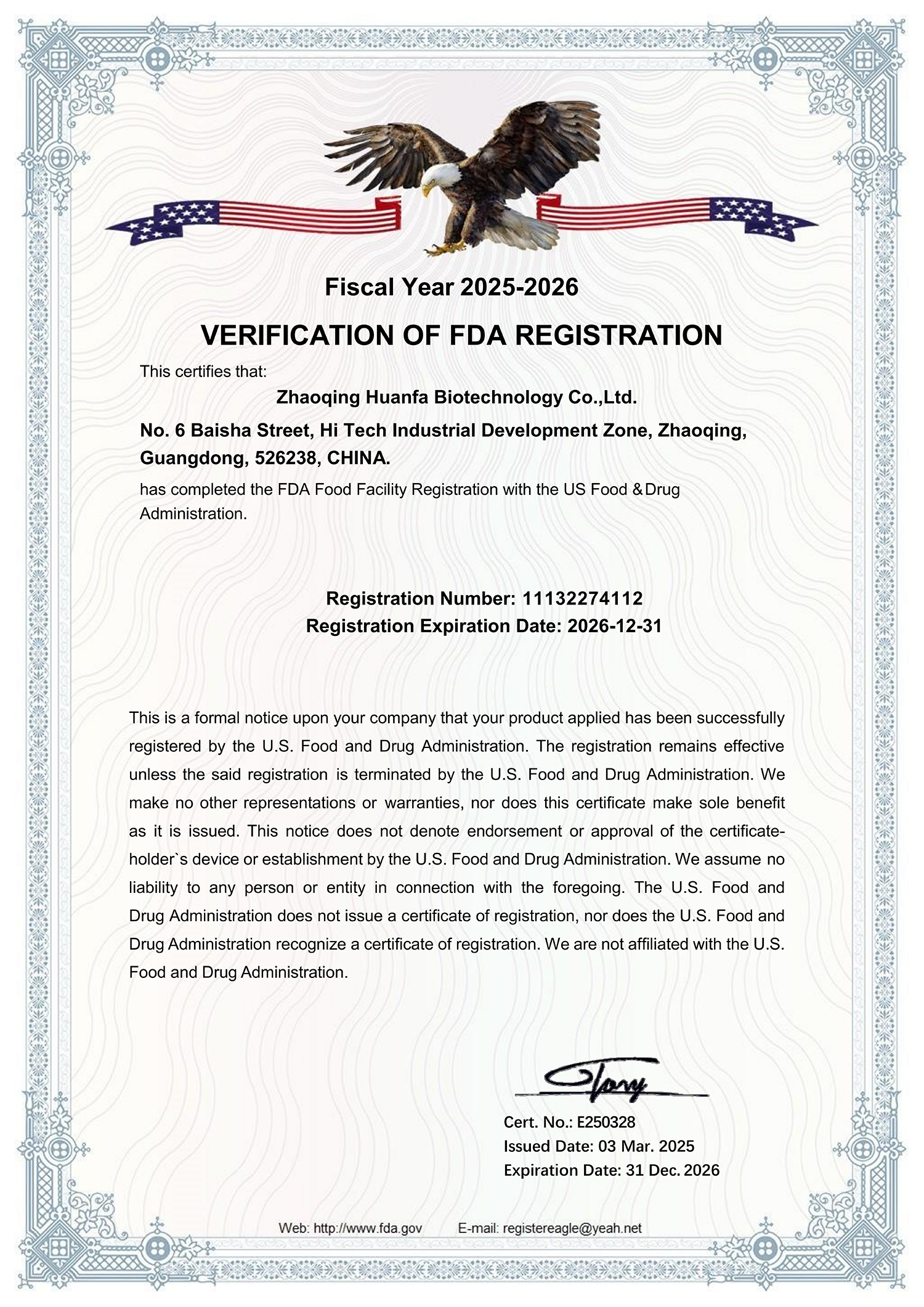
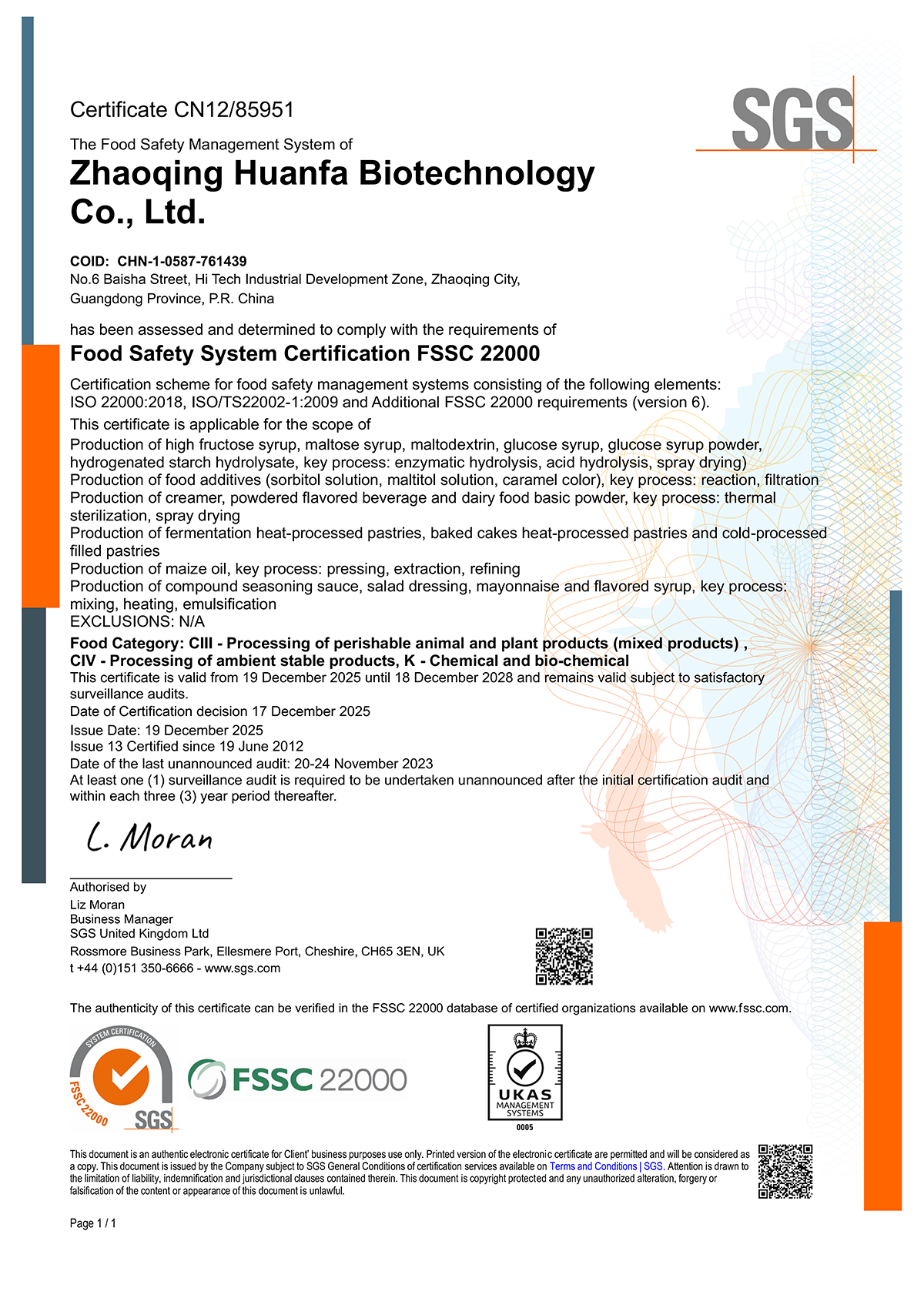
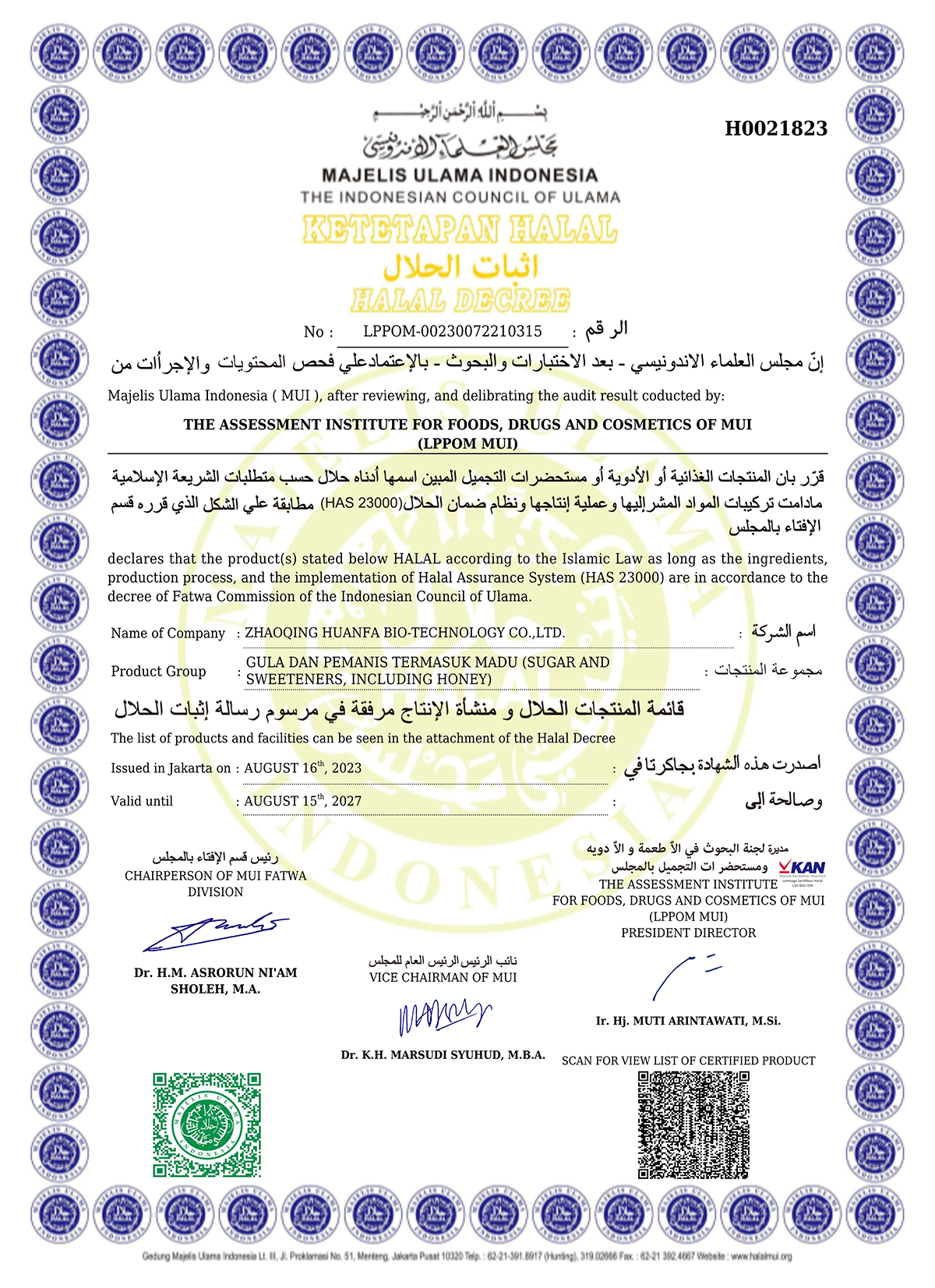
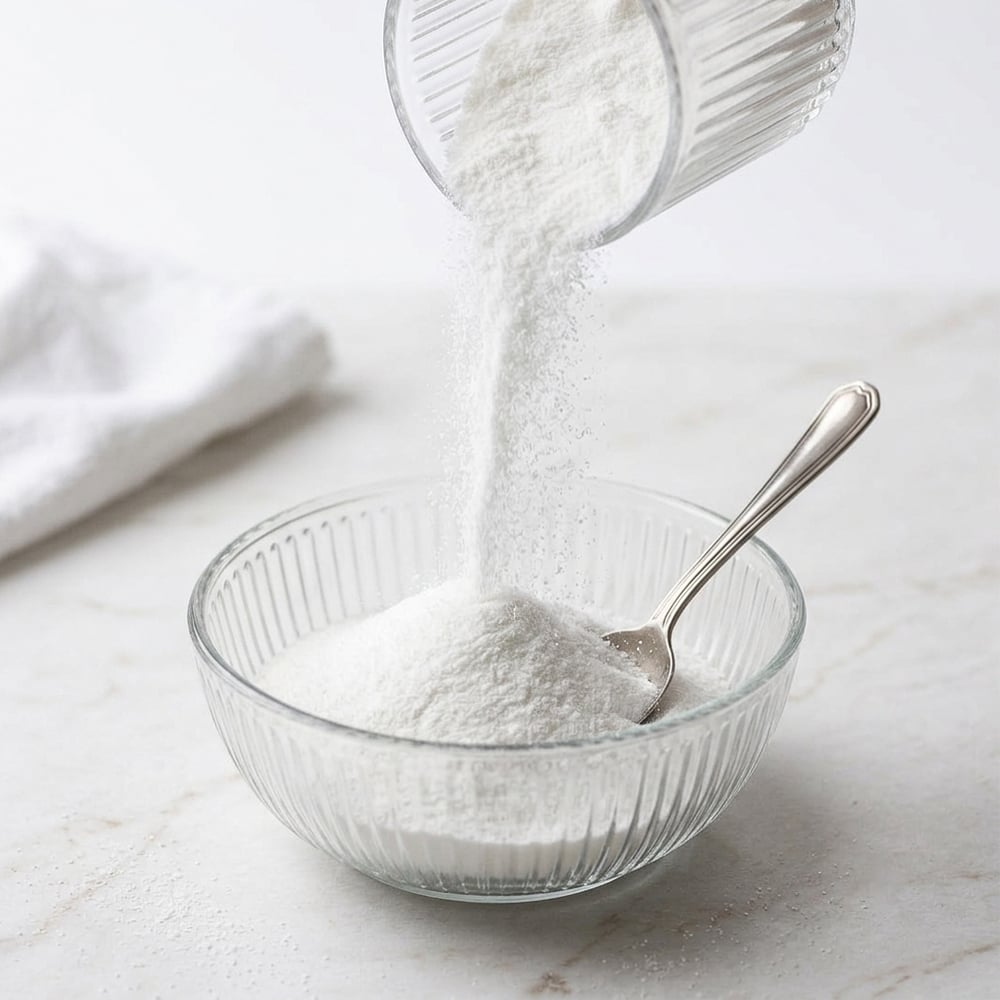
Huanfa Biotechnology's Caramel Color Class I (E150a) — a clean-label plain caramel manufactured without ammonium or sulfite compounds, under FSSC 22000, ISO 9001, ISO 14001, Kosher & Halal certifications. Contains no 4-MEI and no sulfites. Ideal for whiskey, spirits, bakery, confectionery, juice concentrates, cocoa extenders, and pet food. Available in liquid and powder forms. Global shipping from Guangdong, China.
Caramel Color Class I (E150a), also known as plain caramel, caustic caramel, or spirit caramel, is the most minimally processed of the four internationally classified caramel colors. It is produced by the controlled heating of food-grade carbohydrates — without the addition of ammonium or sulfite compounds — yielding a colorant that ranges from golden yellow to deep red-brown and carries a characteristic rich aftertaste and mild burnt-sugar aroma.
Class I holds a unique position in the caramel color family. It is the only class that the Joint FAO/WHO Expert Committee on Food Additives (JECFA) has assigned an Acceptable Daily Intake (ADI) of "not specified" — the highest safety designation possible, indicating that it presents no toxicological concern at levels consistent with good manufacturing practice. It contains no 4-methylimidazole (4-MEI) and no sulfite residues, making it the caramel color of choice for brands responding to consumer demand for simpler, recognizable ingredient labels.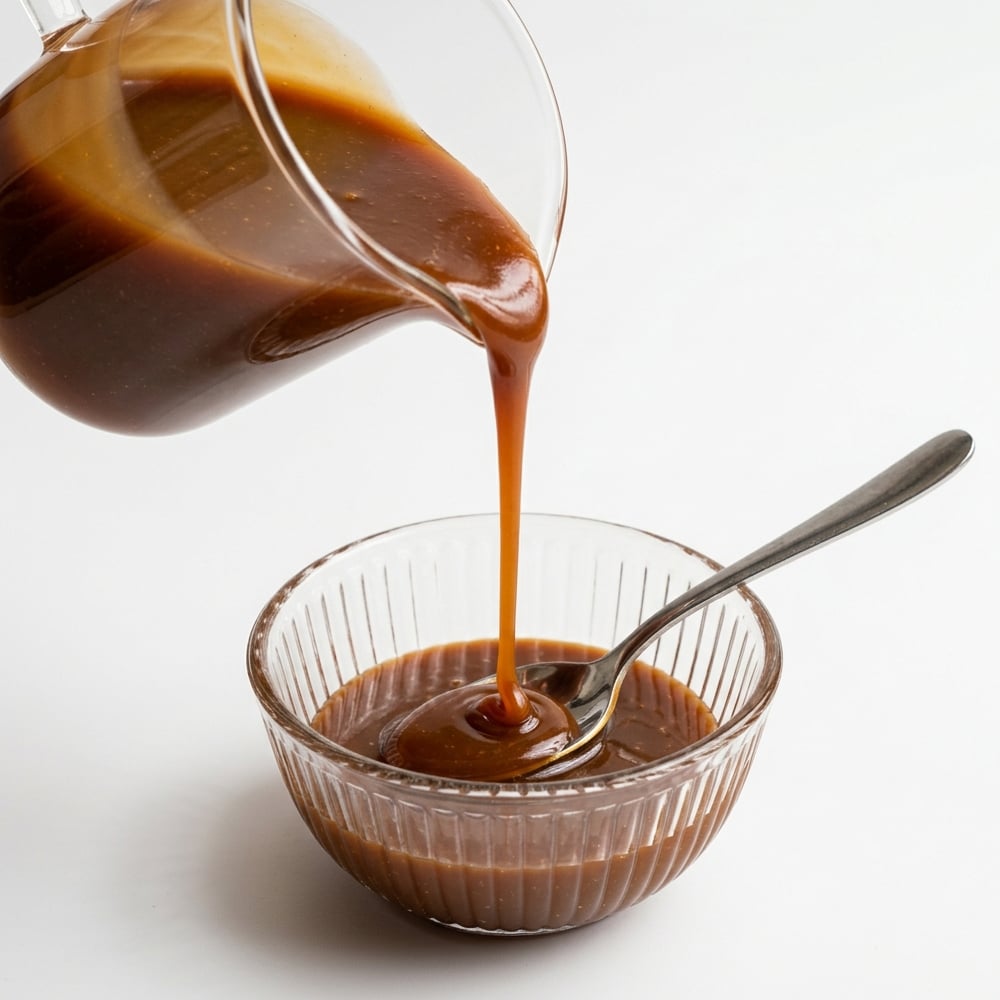
This "clean-label" advantage, combined with Class I's unmatched alcohol stability, has made it the fastest-growing caramel color segment globally. From premium single malt Scotch whisky to organic sourdough bread, from craft confectionery to natural pet food, formulators increasingly choose Class I when both performance and label transparency matter.
At Huanfa Biotechnology, Class I caramel color is manufactured using glucose syrup and high fructose syrup produced in-house within our vertically integrated starch processing complex — ensuring the carbohydrate feedstock quality that drives consistent caramelization. Available in both liquid and spray-dried powder forms, our E150a caramel delivers the color, clarity, and regulatory confidence that today's market demands.
How Class I Differs from Class IV
Understanding which caramel class to choose is about matching the colorant's chemical profile to your product's pH, alcohol content, salt level, and labeling requirements.
| Property | Class I (E150a) — This Product | Class IV (E150d) |
| Reactants used | None (acids/alkalis only) | Ammonium + sulfite compounds |
| 4-MEI content | None (does not form without ammonium) | Present (≤ 10–250 ppm depending on specification) |
| Sulfite residues | None | ≤ 0.2% (on color basis) |
| Color range | Golden yellow → red-brown → dark brown | Light brown → deep black-brown |
| Alcohol stability | Highest of all four classes | Moderate (up to ~30% ABV) |
| Acid stability | Good above pH 3.0; some grades to pH 2.8 | Excellent down to pH 2.0 |
| Salt tolerance | Good | Excellent (up to 20% NaCl) |
| Ionic charge | Neutral to slightly negative | Strong negative |
| Flavor impact | Noticeable aftertaste; mild burnt-sugar aroma | Very mild; essentially neutral |
| JECFA ADI | "Not specified" (safest category) | 0–200 mg/kg body weight |
| Clean-label positioning | Excellent — no 4-MEI, no sulfites | Requires 4-MEI monitoring |
| Best applications | Whiskey, spirits, bakery, confectionery, pet food, juice concentrates, cocoa extenders | Cola, soft drinks, soy sauce, acidic sauces, seasonings |
Rule of thumb: Class I = cleaner label, alcohol-stable, warmer tones. Class IV = maximum coloring power, acid-stable, darker blacks.
Why Source Caramel Color Class I from Huanfa Biotechnology?
1. Vertically Integrated Carbohydrate Supply
Most caramel color manufacturers purchase glucose syrup from external suppliers — introducing raw material variability that inevitably affects caramelization consistency. Huanfa produces its own glucose syrup and high fructose syrup within the same 250,000-square-meter integrated facility, providing our caramel operations with a captive, quality-controlled carbohydrate feedstock. The result is batch-to-batch color consistency that independent color houses cannot match.
2. Clean-Label by Design
Because Class I uses no ammonium or sulfite reactants, 4-MEI simply cannot form and sulfite residues are absent from the finished product. There is no "limit to meet" — there is nothing to measure. For brands navigating California Proposition 65, EU food additive re-evaluations, or retailer clean-label initiatives, this inherent simplicity eliminates regulatory risk and testing burden. It is the caramel color equivalent of "made from ingredients you can pronounce."
3. Dual-Form Supply: Liquid and Powder from One Manufacturer
Many caramel color buyers source liquid from one supplier and powder from another — introducing color matching complexity and supply chain fragmentation. Huanfa manufactures both liquid and spray-dried powder Class I caramel under the same roof, using the same base color, and testing both forms to the same quality standards. This single-supplier model simplifies procurement, ensures color matching, and gives you the flexibility to switch between liquid and powder as your production needs evolve.
4. Internationally Recognized Certifications
Huanfa's integrated management system is independently audited and certified:
FSSC 22000:GFSI-benchmarked food safety system certification
ISO 9001:2015:Quality management system
ISO 14001:2015:Environmental management system
Kosher Certification:Year-round and Passover-certified
Halal Certification:Compliant with Islamic dietary requirements
Non-GMO:Carbohydrate feedstocks sourced from verified non-GMO corn
5. Global Brand Track Record
Huanfa's starch derivatives and caramel colors are trusted by Mars Wrigley, Nestlé, Heinz, Perfetti Van Melle, Unilever, Procter & Gamble, and Colgate-Palmolive — brands that maintain the most rigorous supplier qualification programs in the industry.
6. Strategic Location & Logistics
Located in Zhaoqing, Guangdong — within three hours of the ports of Guangzhou, Shenzhen, and Hong Kong — Huanfa offers competitive ocean freight to all major markets with experience in ISO tank, flexitank, and bulk liquid logistics.
7. R&D-Driven Customization
Our 60-member R&D team can develop custom Class I specifications to match your exact requirements — including adjusted color intensity, modified red-to-yellow hue balance, tailored viscosity profiles for specific pumping systems, and optimized formulations for high-proof alcohol systems.
Key Functional Properties
Unmatched alcohol stability: Class I caramel remains fully soluble and color-stable in high-proof spirits up to and beyond 40% ABV — a property no other caramel class can match. This makes it the only caramel color suitable for whiskey, brandy, rum, and other distilled spirits where color must remain uniform from bottle to bottle over years of shelf life.
No 4-MEI, no sulfites — by design: Because Class I production uses neither ammonium nor sulfite reactants, 4-MEI simply cannot form and sulfite residues are absent. This eliminates the regulatory complexity and consumer concern associated with Class III and IV caramel colors, positioning Class I as the definitive clean-label caramel.
Highest safety designation: JECFA assigns Class I an ADI of "not specified" — meaning no upper intake limit — compared to 0–160 mg/kg for Class II and 0–200 mg/kg for Classes III and IV. For brands marketing to health-conscious consumers or navigating strict regulatory environments, this is a meaningful differentiator.
Warm, natural color palette: Class I delivers golden amber to rich red-brown hues — the warm, "natural" brown tones associated with traditionally caramelized sugar, oven-baked goods, and barrel-aged spirits. It does not produce the deep black-browns of Class IV, making it the preferred choice where a natural appearance is central to the product's identity.
Good salt and tannin tolerance: Class I remains stable in moderate-salt and high-tannin environments, performing reliably in fermented sauces, gravies, and tea-based beverages — though not to the extreme salt levels where Class III or IV would be specified.
Mild emulsification support: The colloidal nature of Class I caramel provides incidental emulsification benefits in some formulations, helping stabilize oil-water interfaces in sauces and dressings.
Light-protective qualities: Caramel color can help shield light-sensitive flavor compounds and vitamins from photodegradation in clear glass packaging — a secondary benefit particularly valued in bottled spirits and beverages.
Liquid Caramel Color (Standard Form)
| Parameter | Specification | Notes |
| CAS Number | 8028-89-5 | — |
| EINECS | 232-435-9 | — |
| E Number | E150a | EU classification |
| Appearance | Dark amber to deep red-brown, fluid to moderately viscous liquid | — |
| Odor | Characteristic caramel; mild burnt-sugar notes; no off-odors | Distinctive Class I aroma |
| Taste | Noticeable caramel aftertaste; mildly bitter-sweet | Stronger flavor presence than Class IV |
| Color Intensity (Absorbance, 610 nm, 0.1% w/v) | 0.100–0.260 | Custom intensities available |
| Tinctorial Power (Absorbance, 560 nm, 0.1% w/v) | Per customer specification | — |
| Specific Gravity (@ 20°C) | 1.250–1.320 | — |
| Dry Matter (Solids Content) | 55–70% | — |
| pH (as is) | 3.0–5.5 | Varies by acidulant used (citric, phosphoric) |
| Viscosity (@ 25°C) | 100–500 mPa·s (cP) | Pumpable at ambient temperature |
| 4-Methylimidazole (4-MEI) | Not detectable | No ammonium used in production |
| Sulfur Dioxide (SO₂) | Not detectable | No sulfite compounds used |
| Solubility | Fully miscible with water and alcohol; clear solution; no turbidity or sedimentation | — |
| Colloidal Charge | Neutral to slightly negative | — |
| Alcohol Stability | Stable up to high proof (≥ 40% ABV) | Defining property for spirits |
Powder Caramel Color (Spray-Dried)
| Parameter | Specification | Notes |
| Appearance | Amber to dark brown, free-flowing powder | — |
| Odor & Taste | Characteristic caramel; mild aftertaste | — |
| Moisture Content | ≤ 6.0% | — |
| Color Intensity (reconstituted to 0.1% w/v) | Matches customer specification | Adjusted via carrier ratio |
| Solubility in Water | ≥ 98% (clear solution) | — |
| Bulk Density | 450–650 g/L | — |
| pH (5% aqueous solution) | 4.0–6.0 | — |
Heavy Metals — Liquid & Powder
| Element | Limit | Test Method |
| Arsenic (As) | ≤ 1.0 mg/kg | ICP-MS / Atomic Absorption |
| Lead (Pb) | ≤ 1.0 mg/kg | ICP-MS / Atomic Absorption |
| Cadmium (Cd) | ≤ 1.0 mg/kg | ICP-MS |
| Mercury (Hg) | ≤ 0.1 mg/kg | Cold Vapor AAS |
Microbiological Standards — Liquid
| Parameter | Specification | Test Method |
| Total Plate Count | ≤ 200 CFU/g | ISO 4833-1 |
| Coliforms | Absent in 10g | ISO 4832 |
| Escherichia coli | Absent in 1g | ISO 16649-2 |
| Yeast & Mold | ≤ 10 CFU/g | ISO 21527-1 |
| Salmonella spp. | Absent in 25g | ISO 6579-1 |
| Staphylococcus aureus | Absent in 1g | ISO 6888-1 |
Microbiological Standards — Powder
| Parameter | Specification | Test Method |
| Total Plate Count | ≤ 3,000 CFU/g | ISO 4833-1 |
| Coliforms | ≤ 30 MPN/100g | ISO 4832 |
| Escherichia coli | Absent in 10g | ISO 16649-2 |
| Yeast & Mold | ≤ 50 CFU/g | ISO 21527-1 |
| Salmonella spp. | Absent in 25g | ISO 6579-1 |
Shelf Life by Product Form
| Product Form | Shelf Life | Storage Conditions | Key Stability Considerations |
| Liquid Caramel Color | 3–9 months from date of manufacture | Cool, dry, ventilated; 15–25°C; protect from frost; keep containers sealed | Viscosity may increase at low temperatures (reversible upon gentle warming to 20–30°C). Avoid freezing — freeze-thaw cycles irreversibly damage colloidal stability. Prolonged exposure above 30°C may accelerate color degradation. |
| Powder Caramel Color | 12–24 months from date of manufacture | Cool, dry, ventilated; 15–25°C; ≤ 55% relative humidity; avoid direct sunlight | Hygroscopic — must be stored in tightly sealed moisture-barrier packaging. Once opened, use promptly. Caking indicates moisture ingress and the affected material should be discarded. |
Packaging Options
Liquid Caramel Color
| Packaging Type | Net Weight / Volume | Best Suited For |
| Food-grade HDPE jerrycan | 25 kg | Small-volume users, R&D trials, sample evaluation |
| Food-grade HDPE drum | 200 L (~250 kg) | Medium-volume manufacturers; standard factory dosing |
| 200 L steel drum with epoxy-phenolic liner | 200 L (~250 kg) | Extended storage; superior oxygen and moisture barrier |
| IBC tote (Intermediate Bulk Container) — HDPE with steel cage | 1,000–1,250 kg | High-volume production lines; reduced handling |
| Flexitank (single-use multi-layer PE liner in 20' container) | 22–24 metric tons | Maximum logistics efficiency for bulk export buyers |
| ISO tank container (stainless steel, food-grade) | 24–26 metric tons | International bulk liquid shipping; multi-trip service |
| Bulk road tanker | Per order | Regional bulk delivery to distilleries and processing plants |
Powder Caramel Color
| Packaging Type | Net Weight | Best Suited For |
| Multi-wall kraft paper bag with inner PE liner | 25 kg | Standard industrial and food manufacturing |
| Multi-wall kraft paper bag (palletized, stretch-wrapped) | 25 kg × 40 bags/pallet | Warehouse handling and containerized shipping |
| Aluminum-foil-lined kraft bag (recommended) | 25 kg | Tropical destinations; extended storage |
| Big bag / FIBC | 500–1,000 kg | High-volume dry blending operations |
| Custom / private-label packaging | Per inquiry | OEM and distributor-brand formats |
All palletized packaging uses fumigated, ISPM-15 compliant wooden pallets with stretch wrap.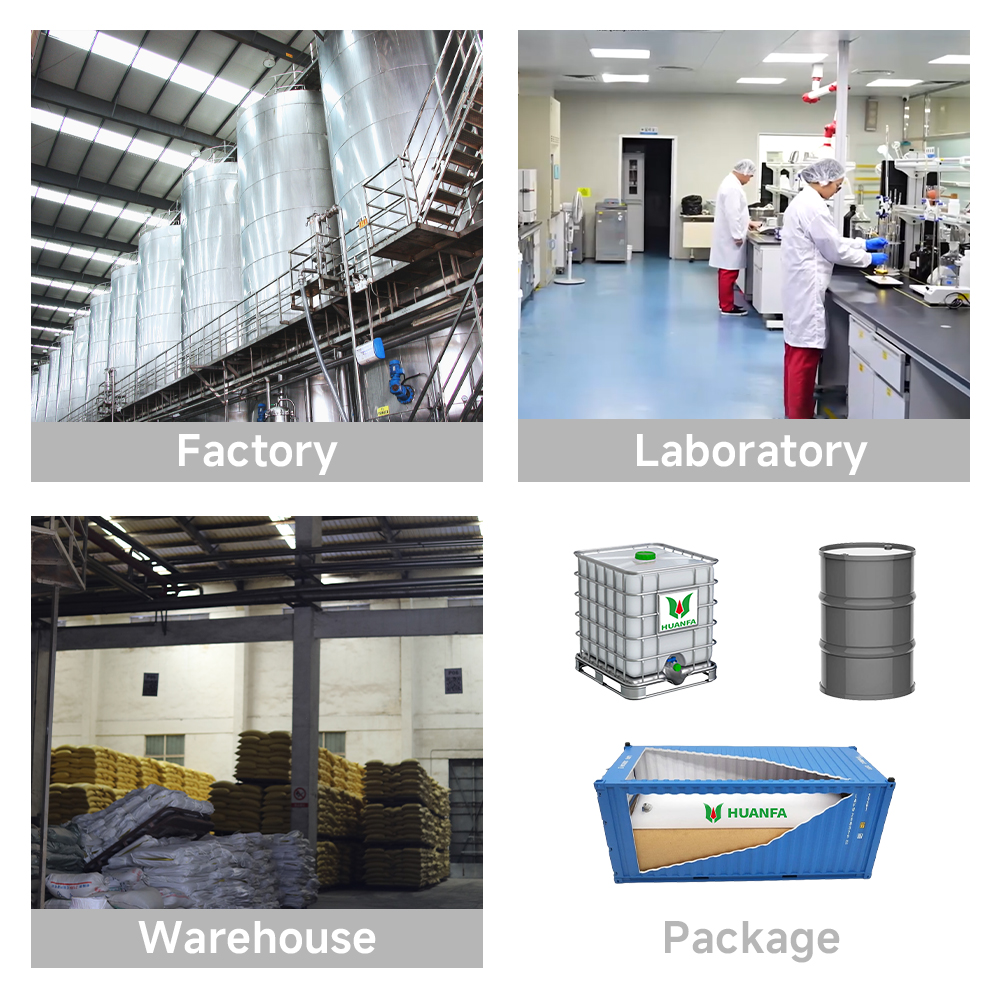
Applications by Product Category
1. Distilled Spirits — The Signature Application
Class I caramel's defining technical advantage is its alcohol stability. No other caramel class can match its performance in high-proof systems, making it the standard colorant in the global distilled spirits industry — particularly in categories where color consistency signals quality and tradition.
Whiskey & Scotch whisky: Used extensively to standardize the color of blended Scotch, Irish whiskey, bourbon, and Canadian whisky. Natural barrel aging produces highly variable color depending on cask history, wood type, and maturation time; Class I caramel ensures that every bottle of a given brand pours with the identical amber-to-copper hue consumers expect, year after year. It dissolves cleanly in 40%+ ABV spirit without haze, flocculation, or precipitation.
Rum (dark & gold): Adds the characteristic golden-amber to deep mahogany color to aged and dark rums, complementing — but not masking — the natural color contributed by barrel aging.
Brandy & Cognac:Standardizes the warm amber color of brandy, compensating for cask-to-cask variation in large-scale blending operations without introducing off-flavors that would compete with delicate fruit and oak notes.
Vodka & white spirits (caramel-toned variants):Used in caramel-flavored or gold-colored vodkas and liqueurs where a light amber tint is the desired visual signature.
Liqueurs & bitters:Contributes color and mild caramel flavor notes to coffee, chocolate, nut, and spiced liqueurs; the mild aftertaste is often complementary rather than intrusive in these flavor-forward products.
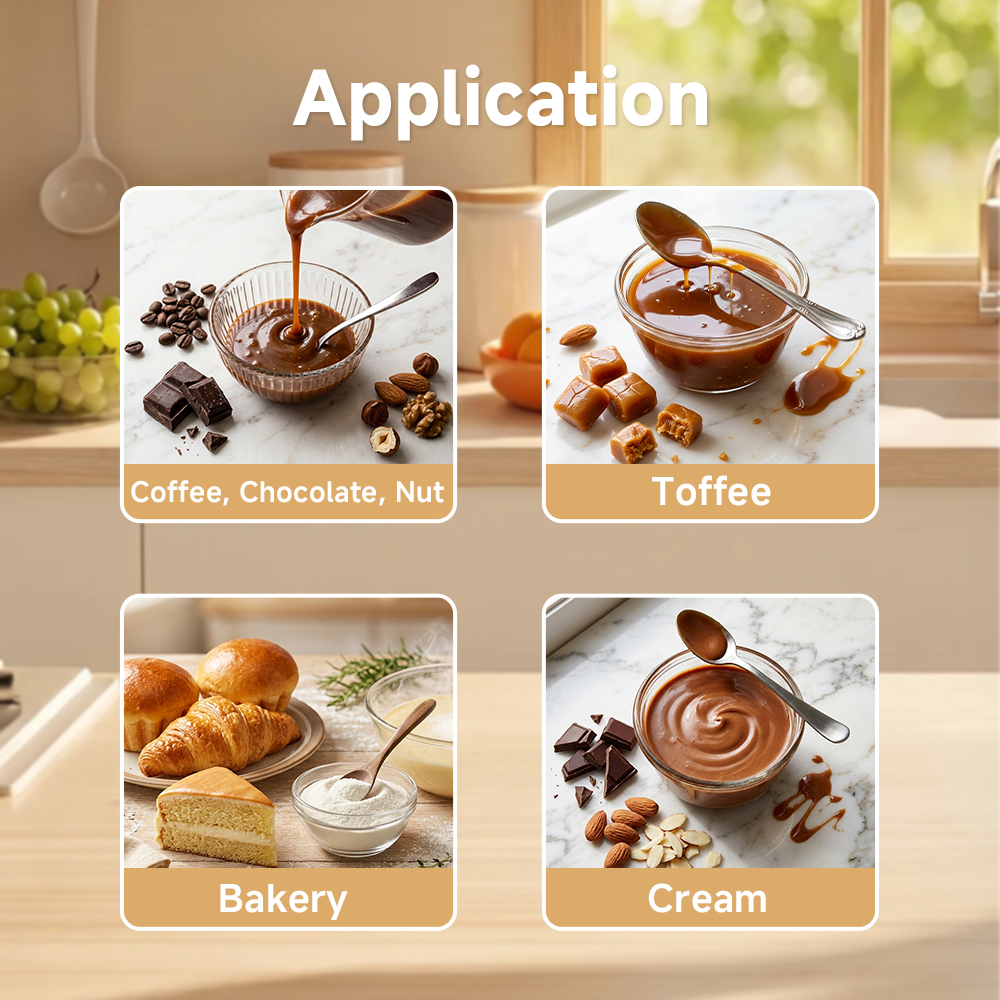
2. Bakery — Breads, Biscuits & Cereal Bars
In bakery, Class I delivers the warm brown tones that signal "baked" and "wholesome" — the color equivalent of a golden crust.
Dark breads & rye breads: Enhances crumb color in pumpernickel, dark rye, multigrain, and whole wheat breads, creating the rich brown interior that consumers associate with rustic, artisanal baking — even in high-speed commercial production where fermentation time is limited.
Brown bread & malt loaves: Standardizes the characteristic dark brown crumb of malted brown breads; the mild caramel flavor profile complements — rather than competes with — malt and molasses notes.
Cookies, crackers & biscuits: Contributes to the golden-brown surface color that develops during baking, enhancing the perception of richness and caramelized flavor. In sandwich cookies, it deepens the color of chocolate-flavored wafers.
Cereal bars & granola bars: Adds warm brown tones to the binder syrup that holds oats, nuts, and dried fruit together, creating the "baked" visual appeal that drives grab-and-go purchase decisions.
Breakfast cereals: Standardizes the toasted brown color of flaked, puffed, and extruded cereals, compensating for natural ingredient color variation across production batches.
Pastry fillings & cream centers: Provides color depth to caramel, chocolate, and spice-flavored fillings without introducing the bitterness of excess cocoa powder.
3. Confectionery
Class I caramel color is a versatile tool in the confectioner's color palette, providing warm brown tones across a wide range of candy types.
Caramels & toffees: Enhances and standardizes the natural caramel color that develops during sugar cooking; the mild burnt-sugar flavor profile of Class I is synergistic with — rather than foreign to — caramel and toffee flavor systems.
Fudge & soft creams: Contributes rich brown coloration to chocolate, maple, and caramel-flavored fudge and cream centers; the mild aftertaste integrates seamlessly with dairy-based confectionery.
Chocolate-flavored confectionery & compound coatings: Provides visual depth to chocolate-flavored compound coatings, allowing formulators to reduce cocoa solids content without sacrificing the dark brown consumer expectation. This is a major cost-optimization application.
Licorice & dark candies: Delivers the deep brown-to-black color of traditional licorice confections and aniseed-flavored hard candies.
Chewing gum: Used in the gum base or coating to provide consistent brown coloration in cinnamon, cola, and coffee-flavored chewing gum products.
Sugar panning: Incorporated into colored sugar shells for dragees and coated confectionery where warm amber and brown tones are desired.
4. Beverages — Non-Alcoholic
While Class IV dominates the cola aisle, Class I has carved out a meaningful position in non-carbonated and lightly carbonated beverages where clean-label appeal and warmer color tones are prioritized.
Lemonade & citrus drinks (brown/amber variants):Provides the amber-brown color in traditional cloudy lemonades and citrus-based soft drinks; stable above approximately pH 3.0 — suitable for most non-cola acidic beverages.
Juice concentrates & nectars: Standardizes the color of apple, pear, peach, and tropical fruit juice concentrates where natural color varies with fruit variety, harvest season, and processing conditions.
Iced tea & tea-based beverages: Contributes to the deep amber color of bottled iced tea; Class I's tannin tolerance ensures stability in tea-based systems where polyphenols could otherwise interact with the colorant.
Functional & wellness beverages: For kombucha, switchel, and other fermented functional drinks marketed to health-conscious consumers, Class I's "not specified" ADI and zero 4-MEI profile align with the brand's clean-label positioning.
Malt beverages & non-alcoholic beers: Adds the warm amber-brown tones expected in malt-based beverages, matching the visual identity of traditional beer without alcohol.
5. Savory Products — Sauces, Gravies & Soups
Gravies & jus: Contributes the rich brown coloration that defines premium gravies and meat jus; the mild caramel flavor adds depth without introducing artificial notes.
BBQ sauce & steak sauce: Adds the dark, glossy brown color associated with slow-smoked and molasses-based barbecue sauces.
Soups & broths (canned and dry mix): Standardizes the golden-brown to dark brown color of beef, onion, and mushroom soups; powder form is preferred for dry soup mixes.
Cooking wines & culinary spirits: Provides consistent color in wines and spirits destined for culinary use; Class I's alcohol stability ensures reliable performance in high-proof cooking wines.
6. Pet Food
Class I is increasingly specified in premium and natural pet food brands where clean-label ingredients are a marketing point of differentiation.
Dry kibble (dog & cat): Standardizes the brown color of extruded kibble across production runs; the "no 4-MEI, no sulfites" profile supports "natural" and "no artificial colors" label claims.
Wet pet food (canned & pouch): Contributes to the brown gravy and meat-chunk coloration that signals "homemade" quality to pet owners.
Pet treats & biscuits: Provides golden-to-dark brown surface color in baked pet treats, ensuring shelf-to-shelf visual consistency.
7. Dairy & Desserts
Caramel-flavored dairy products: Reinforces the visual expectation of caramel flavor in ice cream, pudding, flavored milk, and yogurt — where a warm brown color is part of the multisensory eating experience.
Chocolate milk & flavored dairy drinks: Provides brown color depth in chocolate-flavored milk without adding cocoa solids or introducing the bitterness of excess cocoa powder.
Dessert sauces & syrups: Contributes rich brown color and mild caramel flavor to chocolate, caramel, and butterscotch dessert toppings and sundae syrups.
Applications by Industry Sector — At a Glance
| Industry Sector | Primary Function | Preferred Form | Typical Dosage |
| Distilled Spirits & Liqueurs | Alcohol-stable color standardization for whiskey, rum, brandy | Liquid | 0.1–1.0% of finished spirit |
| Bakery (Breads, Cookies, Cereal Bars) | Crumb and surface color enhancement; warm "baked" visual cues | Liquid or Powder | 0.5–2.0% of flour weight |
| Confectionery (Caramel, Fudge, Chocolate) | Color intensification; cocoa extender for cost optimization | Liquid (syrup) or Powder | Formulation-dependent |
| Non-Alcoholic Beverages (Tea, Juice, Lemonade) | Amber-brown color in clean-label and functional drinks | Liquid | 0.05–0.3% of finished beverage |
| Savory (Gravies, Sauces, Soups) | Visual richness; dry-blend compatibility (powder) | Liquid or Powder | 0.2–2.0% of formulation |
| Pet Food (Premium & Natural Brands) | Clean-label brown color standardization | Liquid or Powder | 0.1–1.0% of formulation |
| Dairy & Desserts | Flavor-complementary brown color enhancement | Liquid | 0.05–0.3% of formulation |
Q: What is the minimum order quantity (MOQ) for Class I caramel color?
A: For liquid caramel, our standard MOQ is one 200 L drum (~250 kg) for trial orders and one 20-foot container (flexitank or IBC totes, approximately 20–24 metric tons) for commercial supply. For powder caramel, the MOQ is 25 kg for samples and one 20-foot container (approximately 18–20 metric tons bagged) for commercial orders.
Q: Does Class I caramel color contain 4-MEI?
A: No. Class I caramel color is manufactured without ammonium compounds, and 4-MEI cannot form in the absence of ammonium reactants. This means no 4-MEI testing, no regulatory thresholds to manage, and no Proposition 65 labeling concerns — a key advantage over Class III and IV caramel colors.
Q: Does Class I caramel color contain sulfites?
A: No. Class I production does not use sulfite compounds, and no sulfite residues are present in the finished product. This eliminates sulfite allergen labeling requirements and makes Class I suitable for sulfite-sensitive applications.
Q: Can Class I be used in cola or other highly acidic soft drinks?
A: Generally not recommended. Class I caramel colors typically remain stable only above pH 3.0 (some specialty grades extend to pH 2.8). Cola beverages, with their phosphoric acid environment bringing pH below 2.5, can cause Class I caramel to precipitate or lose color intensity. For cola and highly acidic soft drinks, Class IV (E150d) is the appropriate choice.
Q: Why does Class I have a stronger taste than Class IV?
A: The simpler, less chemically intensive production process of Class I preserves more of the flavor compounds formed during caramelization — including the characteristic burnt-sugar notes and mild bitterness. This flavor presence is actually desirable in many applications (whiskey, caramel confectionery, dark breads) where it complements the product's flavor profile. If your application requires a completely neutral-tasting colorant, Class IV may be more suitable.
Q: Which form should I choose — liquid or powder?
A: Choose liquid if your product is liquid-based (spirits, sauces, beverages) and you have in-plant liquid dosing capability. Choose powder if you are dry blending into bakery premixes, seasoning mixes, or dry soup bases, or if you need the extended shelf life (12–24 months vs. 3–9 months) that powder offers.
Q: What is the typical lead time for a container order?
A: Standard lead time is 15–20 days from order confirmation to vessel departure. Liquid caramel orders in ISO tanks or flexitanks may require an additional 3–5 days for logistics coordination. Custom color matching adds approximately 7–10 days for development and approval.
Q: Can you match the color of my existing caramel color supplier?
A: Yes. Our R&D team can analyze your reference sample and formulate a Class I caramel that matches its color intensity, hue, and application performance. We provide a match sample for your approval before proceeding to commercial production.

 EN
EN